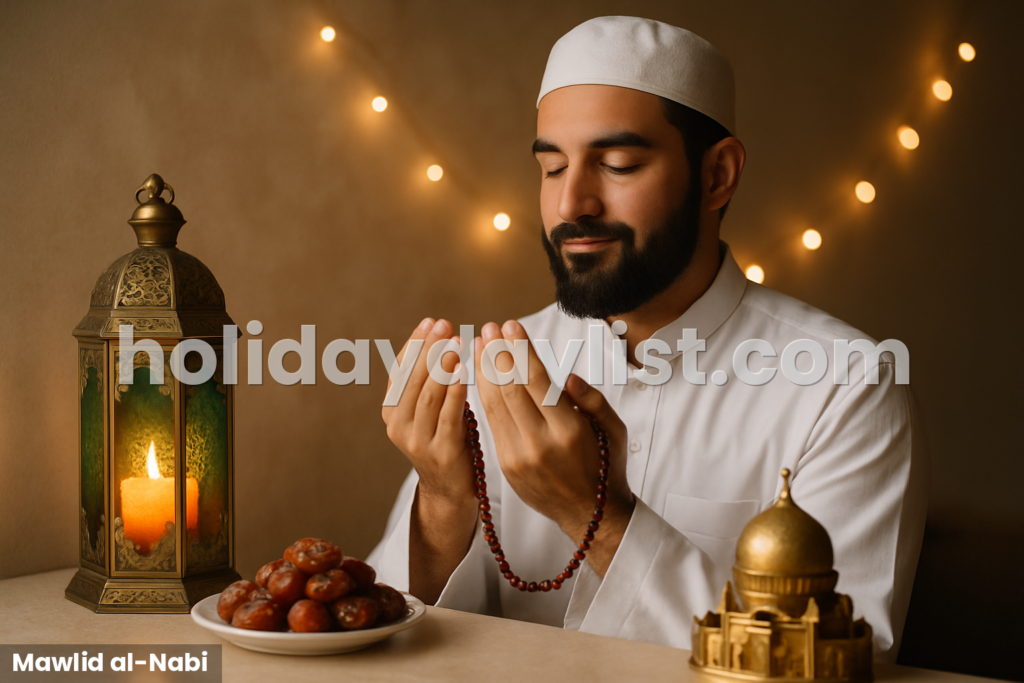
Mawlid al-Nabi
Mawlid al-Nabi, also called Mawlid or the Prophet’s Birthday, is a day when many Muslims remember and honor the life and teachings of the Prophet Muhammad. Its name comes from an Arabic word meaning “birth.” The observance is often associated with the 12th day of Rabiʿ al-Awwal, the third month of the Islamic lunar calendar, though practices and dates can vary among communities.
Because the Islamic calendar follows the moon, its months move through the seasons of the solar calendar. Mawlid therefore falls on different Gregorian dates from year to year. August 26 is the date designated for this observance in some calendars; local dates may differ, so it is helpful to check with a nearby mosque or community organization.
A day of remembrance and reflection
For many who observe Mawlid, the day is an opportunity to reflect on Muhammad’s character and the values emphasized in Islamic teachings, including compassion, generosity, patience, and care for others. People may attend gatherings at mosques or community centers, listen to readings and talks about the Prophet’s life, recite poetry or devotional songs, and spend time in prayer.
Not all Muslims mark Mawlid in the same way. Some communities hold joyful public celebrations, while others observe the day quietly or do not celebrate it, viewing religious commemorations differently. These differences are part of the diversity of Muslim life around the world. A thoughtful way to learn about Mawlid is to ask people how they observe it and to approach their traditions with respect.
How communities may celebrate
In places where Mawlid is celebrated, the observance can bring together families, neighbors, and people from across a community. Gatherings may include stories about Muhammad’s life, reminders of his teachings, and shared meals. Homes, mosques, streets, or public spaces may be decorated, and some communities organize charitable activities or distribute food.
Food is often an important part of celebrations, though dishes and customs vary widely by region and family. A meal can be a way to welcome guests, strengthen friendships, and make sure others are included. For many, the spirit of the day matters as much as any particular event: kindness, gratitude, and generosity can be expressed in small, everyday ways.
Ways to mark the day respectfully
- Learn something new. Read a reliable introduction to Muhammad’s life or listen to a talk by a knowledgeable Muslim speaker.
- Ask with curiosity and care. If a friend or neighbor observes Mawlid, invite them to share what the day means to them—without assuming every Muslim celebrates it in the same way.
- Practice generosity. Consider donating to a community food program, helping a neighbor, or offering time to a local service project.
- Share a meal or a conversation. A welcoming gathering can make space for people to learn from one another and enjoy each other’s company.
A celebration shaped by community
Mawlid al-Nabi is both a religious observance and a reminder of how traditions can bring people together. Its customs differ from one place to another, but many celebrations center on remembrance, learning, devotion, and care for others. Whether marked with a large gathering or quiet reflection, the day offers a chance to think about how values such as compassion and generosity can be carried into daily life.
When is Mawlid al-Nabi?
- Sunday, August 15, 2027
Dates for lunar and religious calendars can differ by a day depending on region, tradition and moon sighting.
Frequently asked questions
When is Mawlid al-Nabi in 2027?
Mawlid al-Nabi is on Sunday, August 15, 2027. Date changes every year (it follows a lunar or religious calendar).
Is Mawlid al-Nabi a public holiday?
No. Mawlid al-Nabi is an observance, not an official public holiday, so schools and businesses stay open as usual.