Hanukkah
Celebrating Hanukkah: The Festival of Lights
Hanukkah, also known as the Festival of Lights, is a beloved Jewish holiday that brings families together in celebration, reflection, and joy. The observance lasts for eight days and nights, commemorating the rededication of the Second Temple in Jerusalem and the miracle of the oil that lasted for eight days when it should have only burned for one.
A Brief History of Hanukkah
The origins of Hanukkah date back to the 2nd century BCE when the Jewish people were under the oppressive rule of the Seleucid Empire. The Maccabean Revolt led by Judah Maccabee resulted in a victorious reclaiming of the Second Temple. Upon entering the temple, they found only one small flask of pure oil enough to light the menorah for a single day. Yet, miraculously, the oil lasted for eight days, allowing time for more oil to be prepared. This miraculous event is what Hanukkah celebrates and is observed through ritual practices and traditions.
Why Hanukkah Matters
Hanukkah is much more than just a historical event; it is a time for reflection on themes of resilience, faith, and community. The celebration strengthens ties among families and communities, highlighting the importance of standing up for one’s beliefs and the fight for religious freedom. Each candle lit on the menorah represents hope, perseverance, and the triumph of light over darkness.
Festive Traditions and Customs
During Hanukkah, various traditions are observed, making it a rich and enjoyable time for everyone involved:
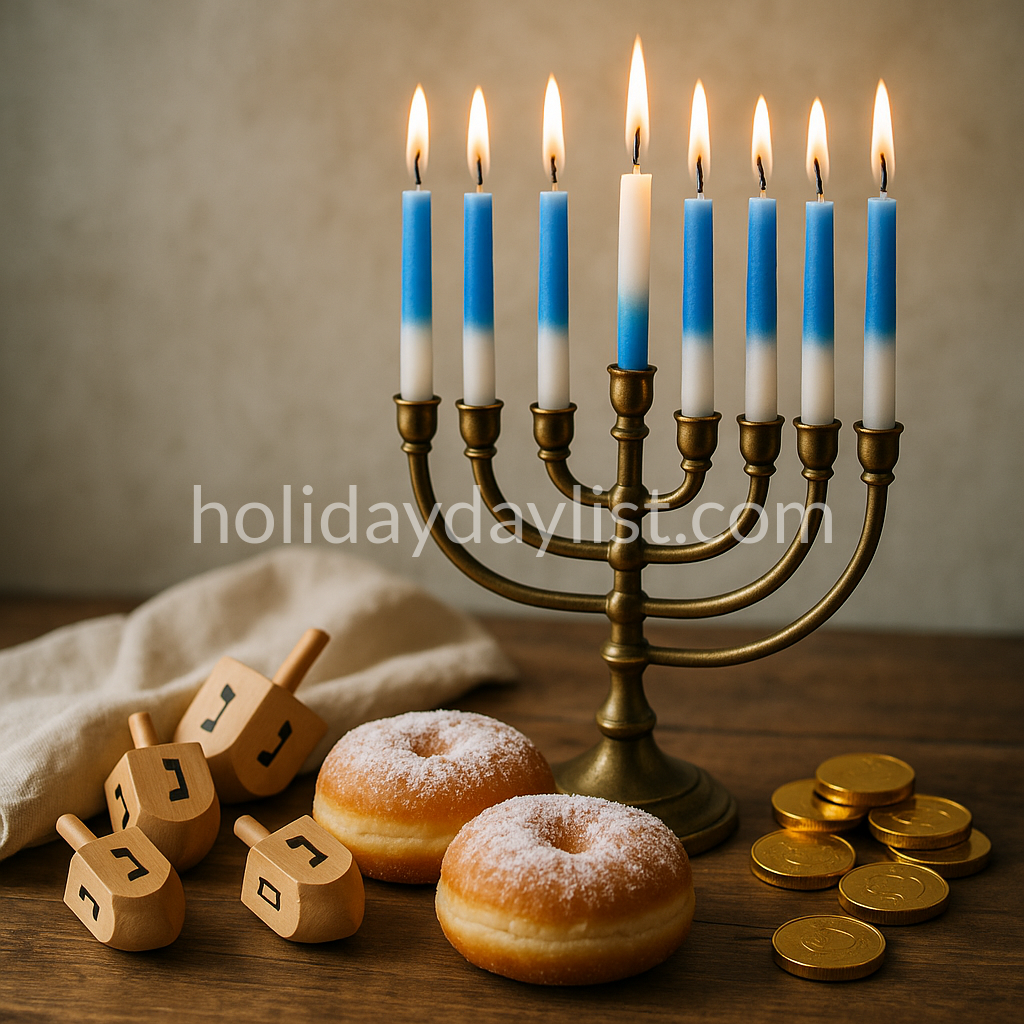
- Lighting the Menorah: The centerpiece of Hanukkah celebrations is the menorah, a nine-branched candelabrum. Each night, an additional candle is lit until all eight candles are aglow, signifying the miracle of the oil.
- Spinning the Dreidel: Families play dreidel games with a four-sided spinning top—this game is not only fun but also represents the Jewish commitment to faith.
- Eating Delicious Foods: Hanukkah is a culinary delight with foods fried in oil, such as latkes (potato pancakes) and sufganiyot (jelly-filled doughnuts), paying homage to the miracle of oil.
- Gift-Giving: While not a primary tradition, many families exchange gifts, especially for children, embodying the festive spirit of the holiday.
Fun Facts about Hanukkah
Did you know these fascinating tidbits about Hanukkah?
- Hanukkah is often called the “Jewish Christmas,” but it is not as central to Jewish faith as Christmas is to Christianity.
- The Hebrew word “Hanukkah” means “dedication,” signifying the rededication of the Second Temple.
- The dreidel game is not just a form of entertainment; according to tradition, it originated during the time of Greek rule when Jewish people were forbidden to study the Torah.
Ways to Celebrate Hanukkah with Family and Friends
Engaging in traditions and activities can enhance your Hanukkah festivities. Here are some enjoyable ways to celebrate:
- Host a Hanukkah Dinner: Gather family and friends to share a meal featuring traditional Hanukkah foods. Don’t forget the latkes!
- Light the Menorah Together: Make the lighting of the menorah a special event by gathering to recite blessings and spend time sharing stories about the significance of the holiday.
- Craft for Kids: Help children create their own dreidels or decorate menorahs using arts and crafts supplies.
- Volunteer: In the spirit of giving, consider volunteering or donating to a local charity, fostering the values of community and kindness.
When is Hanukkah?
Hanukkah: Date changes every year (it follows a lunar or religious calendar).
| Year | Date | Day of the week |
|---|---|---|
| 2026 | December 5 – December 11 | Saturday – Friday |
| 2027 | December 25 – December 31 | Saturday – Friday |
Reviewed by the Holiday List editorial team on October 21, 2026 · Last updated October 21, 2026.
Frequently asked questions
When is Hanukkah in 2026?
Hanukkah is on Saturday, December 5, 2026. After that, it falls on Saturday, December 25, 2027. Date changes every year (it follows a lunar or religious calendar).
Is Hanukkah a public holiday?
No. Hanukkah is an observance, not an official public holiday, so schools and businesses stay open as usual.