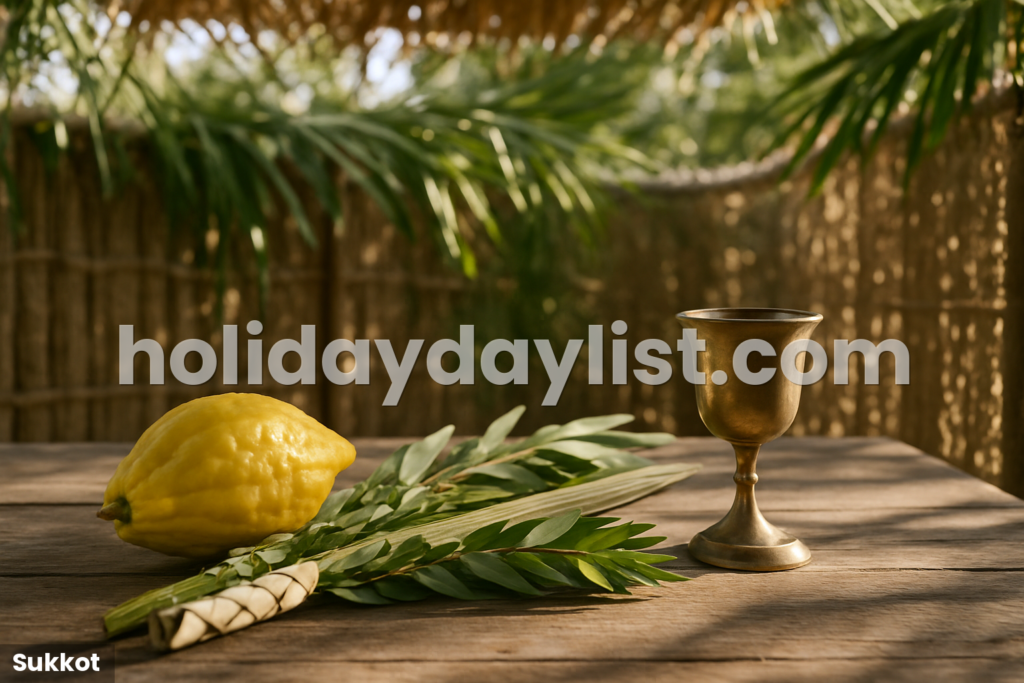
Sukkot
Sukkot is a joyful Jewish holiday that celebrates the fall harvest and recalls the Israelites’ journey through the wilderness after leaving Egypt. It begins on the 15th day of the Hebrew month of Tishrei, usually in September or October. Because the Hebrew calendar and Gregorian calendar do not line up exactly, Sukkot’s dates change from year to year. September 25 may be its starting date in a particular year, but it is not a fixed date on the Gregorian calendar.
The holiday lasts seven days in Israel and eight days in many Jewish communities outside Israel. It is also known as the Feast of Booths or the Feast of Tabernacles, names inspired by its most recognizable tradition: building and spending time in a temporary shelter called a sukkah.
A shelter with a story
A sukkah is a simple, temporary structure, often built in a backyard, on a patio, or in a shared community space. Its roof is traditionally made from natural materials such as branches or leaves, arranged so that the sky can be seen through it. Families may decorate the shelter with fruit, paper chains, artwork, or other festive touches.
The sukkah recalls the temporary dwellings associated with the Israelites’ years in the wilderness. It also offers a reminder that comfort and security can be fragile—and that gratitude, community, and faith can matter just as much as sturdy walls. During Sukkot, people may eat meals in the sukkah, welcome guests, and, when conditions allow, sleep there. The exact customs vary among families and communities.
Harvest joy and meaningful symbols
Sukkot is one of the Jewish festivals connected with the agricultural year. In ancient times, it was a time to gather the fruits of the harvest and celebrate the bounty of the land. That seasonal spirit is still part of the holiday: festive meals, fresh produce, and time with loved ones make it a particularly welcoming occasion.
Another well-known Sukkot practice is holding and waving the arba minim, or Four Species. These are the etrog, a fragrant citrus fruit; the lulav, a bundle that includes palm, myrtle, and willow branches; and the branches are traditionally held together with the etrog. They are waved in different directions during prayers, expressing gratitude and a connection to the world around us. The plants and the way they are brought together have inspired many interpretations, including ideas of unity and the variety within a community.
How Sukkot is celebrated
- Build or decorate a sukkah. A family can make a small, safe version with a simple frame and leafy decorations, or join a synagogue or community gathering.
- Share a meal outdoors. Enjoying dinner in a sukkah is a lovely way to welcome guests and make the holiday’s traditions part of everyday life.
- Give thanks for the harvest. Prepare a meal featuring seasonal fruits and vegetables, visit a farmers market, or talk about where food comes from.
- Learn about the Four Species. Discover what each plant looks like and how it is used in Jewish tradition. Some communities provide opportunities to see or participate in the ritual.
- Make room for hospitality. Invite a friend, neighbor, or relative to share a meal or a conversation. Welcoming others is a fitting way to honor the holiday’s communal spirit.
A festival of shelter, gratitude, and togetherness
Sukkot brings together several big ideas in a hands-on, joyful way: remembering a journey, appreciating the harvest, and noticing the beauty of temporary shelters and shared meals. Its traditions can be experienced in many different ways, from lively gatherings in a decorated sukkah to quiet reflection beneath an open roof.
Whether you are observing Sukkot as part of your faith or learning about it as a neighbor, the holiday offers a warm invitation to pause, give thanks, and make space for others. A meal shared under branches may be simple, but that is part of its charm: it turns an ordinary evening into a reminder of gratitude, resilience, and community.
When is Sukkot?
- Saturday, October 16, 2027 – Saturday, October 23, 2027
Dates for lunar and religious calendars can differ by a day depending on region, tradition and moon sighting.
Frequently asked questions
When is Sukkot in 2027?
Sukkot is on Saturday, October 16, 2027. Date changes every year (it follows a lunar or religious calendar).
Is Sukkot a public holiday?
No. Sukkot is an observance, not an official public holiday, so schools and businesses stay open as usual.