St. Martin’s Day (Martinmas)
St. Martin’s Day, also called Martinmas, is observed on November 11. The feast honors St. Martin of Tours, a fourth-century Christian bishop, and is marked in parts of Europe with lantern walks, seasonal foods, and customs tied to the approach of winter.
How St. Martin’s Day began
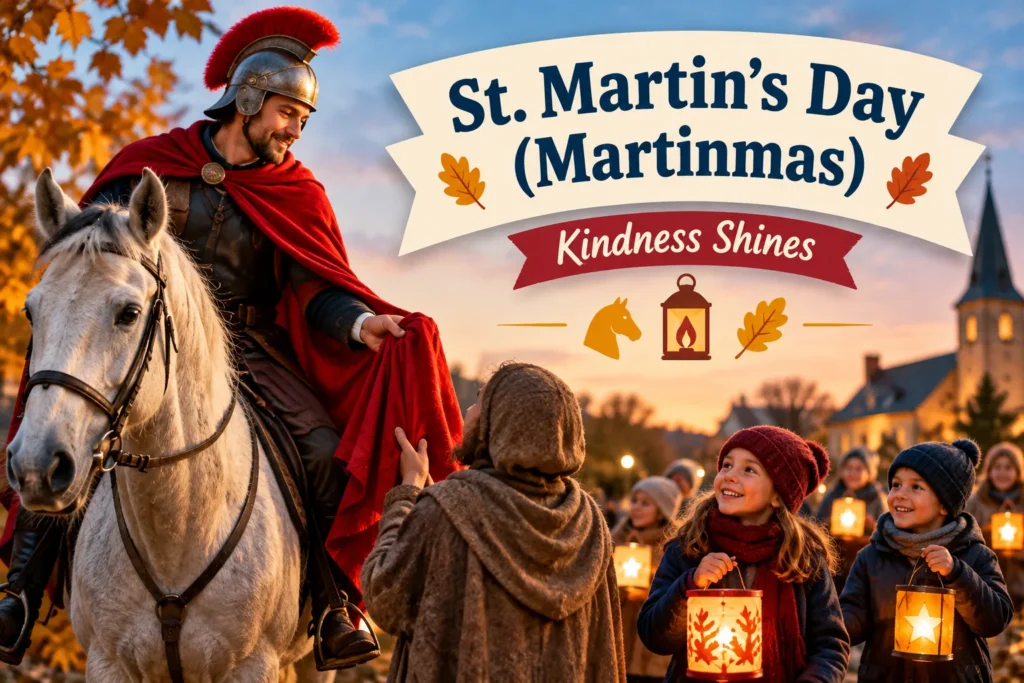
Martinmas comes from the Christian feast day for St. Martin of Tours, whose life and reputation for kindness became central to the observance. Martin was a Roman soldier before becoming a Christian and later a bishop in Gaul, in what is now France. He is widely known for a story in which he shared his cloak with a cold, poorly dressed man.
The November 11 feast day became associated with the end of the agricultural year and the start of winter preparations. Customs differ from place to place, and not every tradition has a single, clearly documented beginning. Today, Martinmas is observed through religious services and local seasonal gatherings, especially in parts of Europe.
Lanterns, sharing, and seasonal change
In Germany, Austria, the Netherlands, and other parts of Europe, children may join lantern processions around Martinmas. They carry handmade lanterns through streets or village squares, sometimes singing traditional songs. In some communities, a person dressed as St. Martin rides a horse at the head of the procession. The lanterns bring light to the early darkness of November, while the story of Martin’s shared cloak gives the day a theme of generosity.
Food traditions also vary by region. In some places, roast goose is associated with Martinmas, and bakeries may make small pastries shaped like a person or a crook. These customs are linked to the seasonal calendar and local history; they’re not observed everywhere, and families often mark the day in their own way.
November 11 also falls near the time when farming communities traditionally finished autumn work and prepared for colder weather. In some European regions, Martinmas was connected with settling accounts, beginning a new work arrangement, or enjoying food from the harvest. The details depended on local practice, but the date offered a clear point in the year to gather and look ahead to winter.
Ways to observe Martinmas
- Make a paper lantern with a battery-powered light, then take an early-evening walk with family or friends. Check local event listings for a community procession.
- Read a child-friendly account of St. Martin’s life and talk about what it means to share with someone who needs help.
- Prepare a seasonal meal or bake a simple bread or pastry. If you try a regional recipe, learn where it comes from and how it’s traditionally served.
- Bring light to a neighbor’s day by delivering a small homemade treat, helping with an errand, or donating warm clothing in good condition.
- Attend a church service or local Martinmas event if one is held nearby. Traditions vary, so follow the customs of the community hosting it.
Last updated November 5, 2026.
When is St. Martin’s Day (Martinmas)?
St. Martin’s Day (Martinmas): Every year on November 11.
| Year | Date | Day of the week |
|---|---|---|
| 2026 | November 11 | Wednesday |
| 2027 | November 11 | Thursday |
| 2028 | November 11 | Saturday |
| 2029 | November 11 | Sunday |
| 2030 | November 11 | Monday |
Frequently asked questions
When is St. Martin’s Day (Martinmas) in 2026?
St. Martin’s Day (Martinmas) is on Wednesday, November 11, 2026. After that, it falls on Thursday, November 11, 2027. Every year on November 11.
Is St. Martin’s Day (Martinmas) a public holiday?
No. St. Martin’s Day (Martinmas) is an observance, not an official public holiday, so schools and businesses stay open as usual.
What does St. Martin’s Day commemorate?
St. Martin’s Day honors Martin of Tours, a fourth-century Christian bishop. A well-known story says he shared his cloak with a cold man, giving the day an association with generosity.
How is Martinmas celebrated in Europe?
In parts of Europe, children carry handmade lanterns in processions, sometimes led by someone dressed as St. Martin on horseback. Some communities also serve roast goose or bake pastries shaped like a person or a crook.
What can I do to observe St. Martin’s Day?
You can make a lantern and take an early-evening walk, attend a local procession or church service, or prepare a seasonal meal. Sharing food, helping a neighbor, or donating warm clothing also reflects the day’s theme of generosity.