International Week of Science and Peace
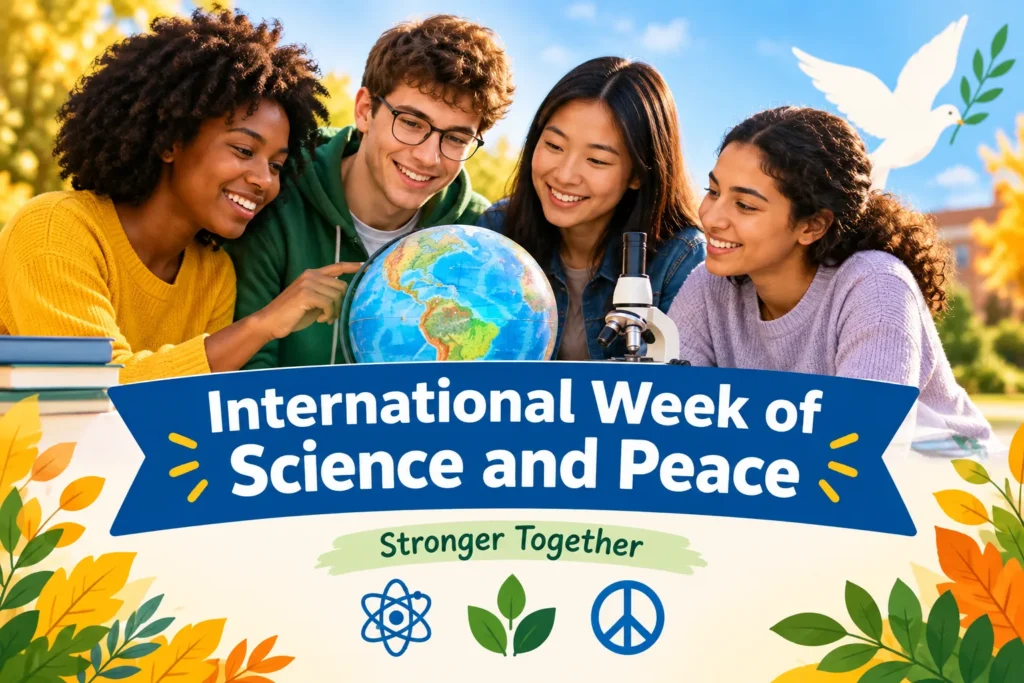
International Week of Science and Peace is observed each year from November 9 to 15. The United Nations recognizes the week as a chance to consider how science can contribute to peace and encourage cooperation. Its focus reaches beyond laboratories: it invites people to think about how scientific knowledge is shared and applied.
How the week started
According to the United Nations, the International Week of Science and Peace was first observed in 1986 as part of the International Year of Peace. Events were organized through a non-governmental initiative, and the International Year of Peace secretariat was informed about the preparations and activities. In December 1988, the United Nations General Assembly adopted Resolution 43/61, proclaiming that the week would take place each year during the week that includes November 11.
The United Nations says the observance encourages academic exchanges on subjects of universal importance and raises public awareness of the relationship between science and peace. It also aims to support international understanding and cooperation in applying science to promote peace throughout the year. Events and activities vary by place and year; the week is a time for learning and exchange, rather than a single fixed ceremony.
Science, cooperation, and peace
Many scientific questions cross national borders. Weather systems, oceans, infectious diseases, and environmental changes don’t stop at political boundaries. Researchers in different countries can compare observations, share methods, and work toward a clearer picture of a problem. That kind of collaboration can build practical ties, even when governments or communities disagree about other matters.
Science also raises questions about responsibility. New knowledge and technology can help address human needs, but their effects depend on how they’re developed and used. The week encourages conversations about ethics, access to knowledge, and the role of evidence in public decisions. It’s a chance to see science not as a distant specialty, but as a shared human activity shaped by curiosity, communication, and care.
Schools, universities, museums, research groups, and community organizations may mark the week with talks, exhibits, classroom activities, or public discussions. The subjects can change from year to year, but the central idea stays steady: scientific cooperation can contribute to understanding and peaceful problem-solving.
Ways to take part
You don’t need a laboratory or a formal event to join in. Choose an activity that helps you learn something new or connect science with a question that matters in your community.
- Visit a science museum, planetarium, university event, or public lecture. Check local listings for activities during November 9–15.
- Pick a global topic, such as clean water, climate, food systems, or public health, and read about how researchers in different places study it.
- Ask a science teacher, librarian, or local researcher to recommend a reliable resource for your age group or interests.
- Try a simple observation project at home or school. Track the Moon’s appearance, keep a weather journal, or compare how plants grow in different conditions.
- Host a small discussion about how evidence can help communities make decisions. Invite people to listen carefully and distinguish what’s known from what still needs investigation.
- Share a science activity with a child, friend, or neighbor, and talk about how people can cooperate to solve problems that affect many communities.
When is International Week of Science and Peace?
International Week of Science and Peace: Every year on November 9 (for 7 days).
| Year | Date | Day of the week |
|---|---|---|
| 2026 | November 9 – November 15 | Monday – Sunday |
| 2027 | November 9 – November 15 | Tuesday – Monday |
| 2028 | November 9 – November 15 | Thursday – Wednesday |
| 2029 | November 9 – November 15 | Friday – Thursday |
| 2030 | November 9 – November 15 | Saturday – Friday |
Reviewed by the Holiday List editorial team on November 4, 2026 · Last updated November 4, 2026.
Frequently asked questions
When is International Week of Science and Peace in 2026?
International Week of Science and Peace is on Monday, November 9, 2026. After that, it falls on Tuesday, November 9, 2027. Every year on November 9 (for 7 days).
Is International Week of Science and Peace a public holiday?
No. International Week of Science and Peace is an observance, not an official public holiday, so schools and businesses stay open as usual.
What is International Week of Science and Peace?
Observed from November 9 to 15, International Week of Science and Peace highlights how scientific cooperation and shared knowledge can support peace, international understanding, and problem-solving.
How did International Week of Science and Peace begin?
The week was first observed in 1986 as part of the International Year of Peace. In 1988, the United Nations General Assembly proclaimed it as an annual observance during the week that includes November 11.
How can people take part in International Week of Science and Peace?
You can attend a public lecture, museum event, or classroom activity, or explore a scientific topic that matters to your community. A simple observation project or discussion about how evidence can inform decisions also fits the week’s focus.
Sources
- United Nations: International Week of Science and Peace, 9–15 November
- United Nations: World Science Day for Peace and Development – International Week
✓ Date matches United Nations: International Week of Science and Peace, 9–15 November (checked automatically on November 4, 2026).