National Skeptics Day
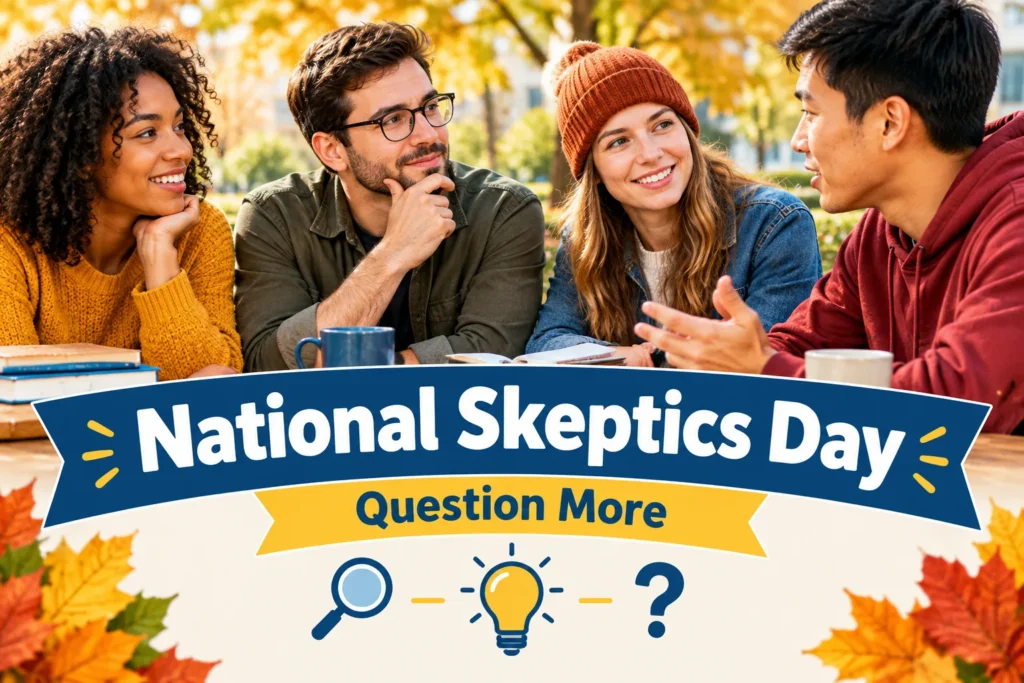
National Skeptics Day is observed on November 4. It’s a chance to celebrate curiosity, careful thinking, and the habit of asking questions before accepting a claim. Skepticism isn’t about rejecting everything; it’s about staying open-minded while looking for good reasons to believe what you hear.
How National Skeptics Day started
According to Holiday Today, National Skeptics Day was created by Adrienne Sioux Koopersmith in 1996. The observance encourages people to ask questions rather than simply accept answers, and to recognize that new evidence may change what they think they know.
The exact reason Koopersmith created the day is not well documented. Its focus on reasoning, evidence, and reflection offers a reminder to pause and check what we believe while remaining open to changing our minds.
What it means to be a skeptic
In everyday conversation, “skeptic” can mean someone who doubts a claim. Thoughtful skepticism goes a step further: it asks for reasons and evidence, while remaining willing to change its mind when new information is convincing. It differs from cynicism, which tends to assume the worst or dismiss ideas without giving them a fair hearing.
This habit can be useful in ordinary situations. An eye-catching headline, a surprising story, or a recommendation passed along by a friend may prompt questions such as: Who is making this claim? What information supports it? Is the source in a position to know? Could important context be missing?
Being skeptical also involves treating people respectfully. Asking someone how they reached a conclusion can lead to a better conversation than mocking them or assuming they are wrong. The goal is not to win an argument; it is to understand what is known, what remains uncertain, and how a claim might be checked.
Ways to celebrate National Skeptics Day
- Check a claim together. Choose a surprising story or familiar saying and look for its original source. Compare how different reliable sources describe it, and notice whether they separate evidence from opinion.
- Practice asking useful questions. When you encounter a claim, try asking, “How do we know?” or “What would change my mind?” These questions make room for thoughtful discussion rather than instant agreement or dismissal.
- Enjoy a mystery. Read a detective story, watch a puzzle-solving film, or try a family riddle. Talk about which clues support each theory and which details might point somewhere else.
- Explore a surprising claim from history or science. Pick a topic that interests your household and use books, museums, or trusted educational sources to learn more. Keep track of which details are well established and which are still uncertain.
- Share information responsibly. Before passing along a dramatic post or message, check its source and context. If you discover an error, correct it kindly and share the clearer information.
- Make curiosity playful. Invite family or friends to bring a question they have always wondered about. Take turns suggesting possible answers, then look for evidence that helps sort them out.
When is National Skeptics Day?
National Skeptics Day: Every year on November 4.
| Year | Date | Day of the week |
|---|---|---|
| 2026 | November 4 | Wednesday |
| 2027 | November 4 | Thursday |
| 2028 | November 4 | Saturday |
| 2029 | November 4 | Sunday |
| 2030 | November 4 | Monday |
Reviewed by the Holiday List editorial team on November 4, 2026 · Last updated November 4, 2026.
Frequently asked questions
When is National Skeptics Day in 2026?
National Skeptics Day is on Wednesday, November 4, 2026. After that, it falls on Thursday, November 4, 2027. Every year on November 4.
Is National Skeptics Day a public holiday?
No. National Skeptics Day is an observance, not an official public holiday, so schools and businesses stay open as usual.
How did National Skeptics Day start?
According to Holiday Today, Adrienne Sioux Koopersmith created National Skeptics Day in 1996. The exact reason she created it is not well documented.
What does National Skeptics Day celebrate?
It celebrates curiosity, careful thinking, and asking questions before accepting a claim. Thoughtful skepticism means looking for evidence while staying open to changing your mind.
How can you celebrate National Skeptics Day?
Check a surprising claim with reliable sources, try a mystery or puzzle, or ask friends and family questions they have always wondered about. Share information responsibly and discuss evidence respectfully.