International Restorative Justice Week
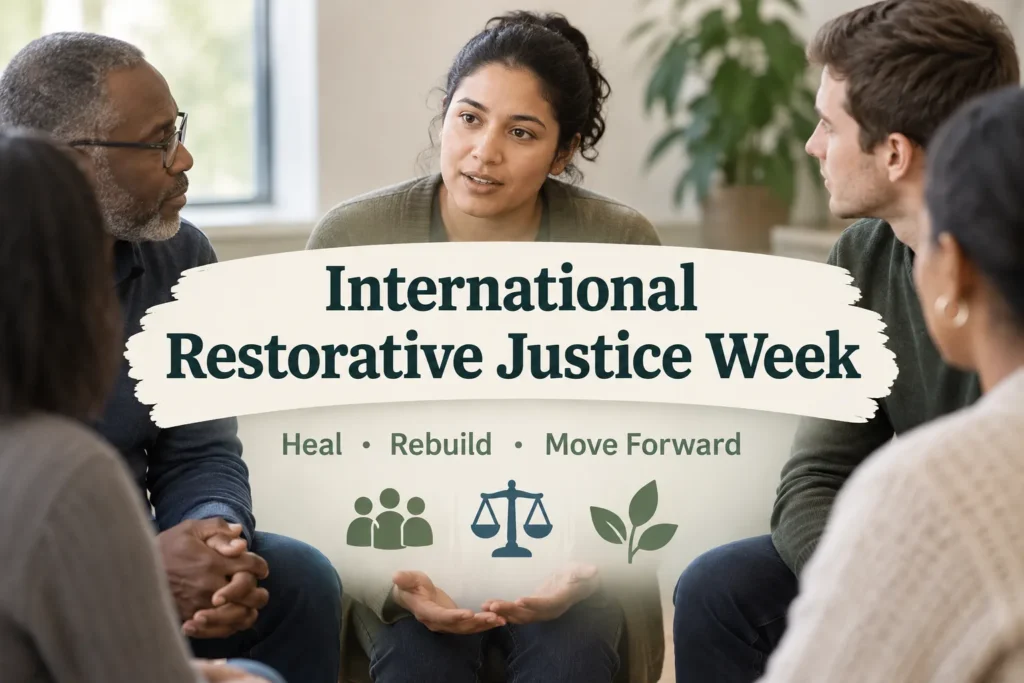
International Restorative Justice Week is observed on November 15, bringing attention to ways of responding to harm that focus on accountability, repairing relationships and meeting the needs of those affected. The observance is part of a broader conversation about justice in schools, communities and criminal justice systems.
How the week started
The exact origin of International Restorative Justice Week and its connection to November 15 is not well documented. The name is used for observances that promote restorative approaches to conflict and harm, rather than for a single, widely recorded founding event. Activities and dates may vary among organizations and communities.
Restorative justice is an approach, not one fixed program. It can include a facilitated conversation between people affected by harm, but participation should be voluntary and guided with care. Depending on the situation, a process may involve the person harmed, the person responsible, family members or other community members. It isn’t a substitute for safety measures or legal protections.
What restorative justice means
Many justice processes ask what rule was broken and what consequence should follow. Restorative approaches also ask who was affected, what they need, and what the person responsible can do to address the harm. The aim is meaningful accountability, not simply avoiding consequences.
Repair can take different forms. It might involve listening to the person harmed, making an agreed-upon apology, replacing damaged property or completing a plan to prevent similar harm. No single action fits every situation, and repair can’t always restore what was lost. The people involved need room to set boundaries and decide what a safe, fair process looks like.
Restorative practices are also used outside formal justice settings. A school might use a guided conversation after a conflict between students. A neighborhood group could bring people together to address ongoing tension. In each case, a trained facilitator can help participants speak and listen without turning the meeting into a debate or forcing anyone to forgive.
Ways to take part
International Restorative Justice Week can be a chance to learn about the approach and consider how communities respond when harm occurs. Try one of these practical steps:
- Look for a local event, public talk or online session hosted by a restorative justice organization, school or community group. Check who is leading it and whether the session is designed for the public.
- Read a plain-language guide from a reputable restorative justice program. Notice how it describes consent, safety, accountability and the needs of people who have been harmed.
- If you’re part of a school, workplace or community group, ask whether it has a clear process for addressing conflict. A useful process should explain who can take part, how privacy is handled and where people can seek support.
- Practice listening during an everyday disagreement. Ask what happened and what the other person needs, then give them time to answer. Listening doesn’t mean agreeing or excusing harmful behavior.
- Support a local program through volunteering, sharing its educational resources or helping organize a discussion. Before promoting a specific process, make sure it’s led by people with appropriate training.
- If you’ve been harmed, you can ask about restorative options without agreeing to participate. You’re entitled to consider your safety, seek independent support and say no.
Last updated November 10, 2026.
When is International Restorative Justice Week?
International Restorative Justice Week: Every year on the third Sunday of November.
| Year | Date | Day of the week |
|---|---|---|
| 2026 | November 15 – November 22 | Sunday – Sunday |
| 2027 | November 21 – November 28 | Sunday – Sunday |
| 2028 | November 19 – November 26 | Sunday – Sunday |
| 2029 | November 18 – November 25 | Sunday – Sunday |
| 2030 | November 17 – November 24 | Sunday – Sunday |
Frequently asked questions
When is International Restorative Justice Week in 2026?
International Restorative Justice Week is on Sunday, November 15, 2026. After that, it falls on Sunday, November 21, 2027. Every year on the third Sunday of November.
Is International Restorative Justice Week a public holiday?
No. International Restorative Justice Week is an observance, not an official public holiday, so schools and businesses stay open as usual.
What is International Restorative Justice Week?
International Restorative Justice Week highlights approaches to harm that focus on accountability, repairing relationships and meeting the needs of people affected. Restorative justice can be used in schools, communities and criminal justice settings.
How did International Restorative Justice Week start?
The exact origin of International Restorative Justice Week and its connection to November 15 aren't well documented. Its name is used for observances promoting restorative approaches, rather than for a single widely recorded founding event.
How can I take part in International Restorative Justice Week?
Look for a local event or online session, read a plain-language guide, or support a local restorative justice program. If you're considering a restorative process after harm, participation should be voluntary, and you can ask about options without agreeing to take part.
Sources
- Minnesota Department of Children, Youth, and Families: Celebrate International Restorative Justice Week
- Department of Justice Canada: Government of Canada supports Halifax restorative justice initiatives
- European Forum for Restorative Justice: Restorative Justice Week
✓ Date matches Minnesota Department of Children, Youth, and Families: Celebrate International Restorative Justice Week (checked automatically on November 10, 2026).