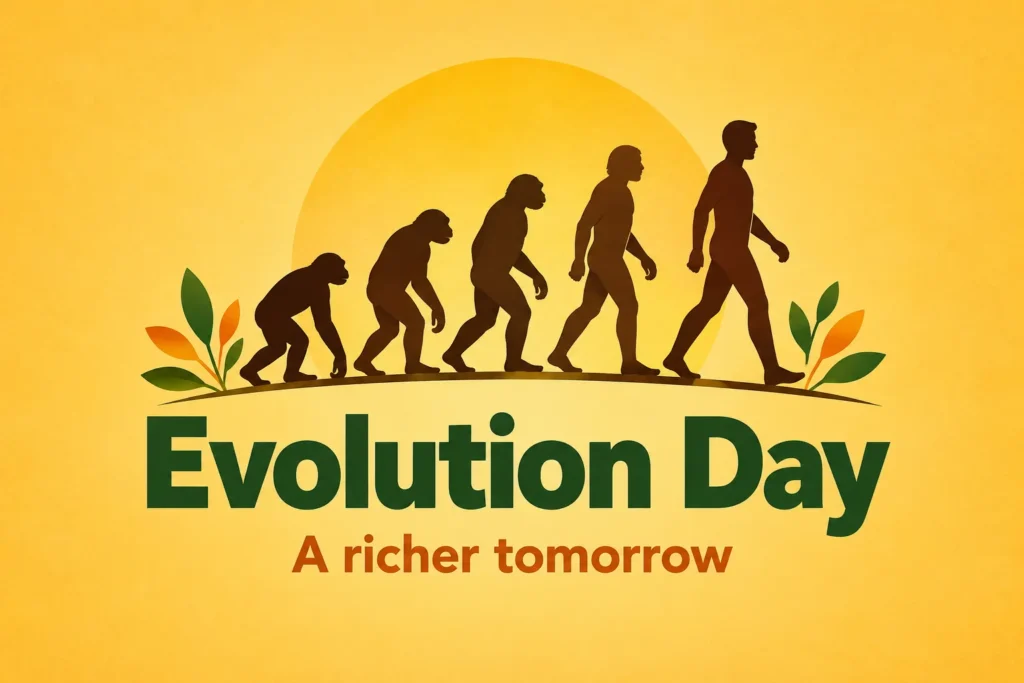
Evolution Day
Evolution Day is observed on November 24, the date associated with the publication of Charles Darwin’s On the Origin of Species in 1859. The day invites people to learn about evolution, consider how scientific ideas develop, and explore the diversity of life on Earth.
How Evolution Day started
The exact origin of Evolution Day as an annual observance isn’t well documented. Its November 24 date points to a landmark in the history of biology: the first publication of Darwin’s book, which presented evidence for evolution by natural selection and changed scientific discussion about how species arise and change.
Evolution Day isn’t a government holiday. It’s generally marked through education and public discussion, with activities that may take place in classrooms, museums, libraries, or at home. The focus is the science of evolution and its place in the history of scientific thought.
Why November 24 matters
Darwin’s book was titled On the Origin of Species by Means of Natural Selection. In it, he argued that species change over generations and that natural selection can help explain how those changes occur. The book drew on observations from years of study, including Darwin’s travels aboard the HMS Beagle.
Evolution is the change in inherited traits in populations over generations. Natural selection is one process that can drive such change: individuals with traits that help them survive and reproduce in a particular environment may pass those traits on more often. Evolution also occurs through other processes, including genetic mutation and the movement of genes between populations.
Darwin wasn’t the only person to develop ideas about evolution, and modern evolutionary biology has grown far beyond the explanations available in 1859. Later discoveries in genetics helped scientists understand how traits are inherited and how variation arises. Today, evolution is a central framework in biology, used to study topics such as fossils, animal behavior, disease, and the relationships among living things.
Ways to observe Evolution Day
You don’t need a special event to take part. A little curiosity and a reliable source can make the day meaningful. Try one of these activities:
- Read a short, age-appropriate account of Darwin’s life or look through a digital copy of On the Origin of Species. Notice how he builds an argument from observations.
- Visit a natural history museum, botanical garden, or local library. Look for exhibits or books about fossils, adaptation, genetics, or biodiversity.
- Choose a familiar species and learn how it is adapted to its environment. A bird’s beak, a plant’s leaves, or an insect’s coloring can lead to questions about variation and survival.
- Start a family conversation about how scientists know what they know. Compare evidence from fossils, living organisms, and DNA, and talk about how different kinds of evidence can support an explanation.
- Watch a reputable educational program or read a science article, then share one new idea with someone else. Keep the discussion open and focus on what the evidence shows.
Last updated November 18, 2026.
When is Evolution Day?
Evolution Day: Every year on November 24.
| Year | Date | Day of the week |
|---|---|---|
| 2026 | November 24 | Tuesday |
| 2027 | November 24 | Wednesday |
| 2028 | November 24 | Friday |
| 2029 | November 24 | Saturday |
| 2030 | November 24 | Sunday |
📄 Free printable 2027 holiday calendar · 📅 Every holiday in 2027, month by month
Frequently asked questions
When is Evolution Day in 2026?
Evolution Day is on Tuesday, November 24, 2026. After that, it falls on Wednesday, November 24, 2027. Every year on November 24.
Is Evolution Day a public holiday?
No. Evolution Day is an observance, not an official public holiday, so schools and businesses stay open as usual.
What is Evolution Day?
Evolution Day is an annual observance focused on the science of evolution and its place in scientific history. It encourages people to learn about how species change and the diversity of life on Earth.
Why is Evolution Day on November 24?
November 24 is associated with the publication of Charles Darwin’s On the Origin of Species in 1859. The book presented evidence for evolution by natural selection and changed scientific discussion about how species arise and change.
How can you observe Evolution Day?
Read about Darwin or evolution, visit a natural history museum or library, or learn how a familiar species is adapted to its environment. The exact origin of Evolution Day as an annual observance isn't well documented.