Día de los Muertos (Day of the Dead)
Día de los Muertos, or Day of the Dead, is a Mexican tradition that honors loved ones who have died. Its observance spans November 1 and 2, with November 1 commonly associated with remembering children who have passed away. The holiday is a time for families and communities to share memories, prepare special foods, and welcome the presence of the departed in a joyful, colorful way.
How Día de los Muertos began
The exact origins of Día de los Muertos are not captured by one simple starting point. The traditions developed through a blending of Indigenous practices honoring the dead and Catholic observances brought to Mexico during Spanish colonization. Over time, these influences became part of a distinctive celebration that remembers the departed while affirming the bonds between generations.
Customs vary from place to place and from family to family. For many people, the holiday is both a time of remembrance and a way to keep loved ones’ stories present in everyday life. It is not simply a Mexican version of Halloween: its central purpose is honoring the dead, often through family traditions shaped over many years.
Altars, flowers, and favorite foods
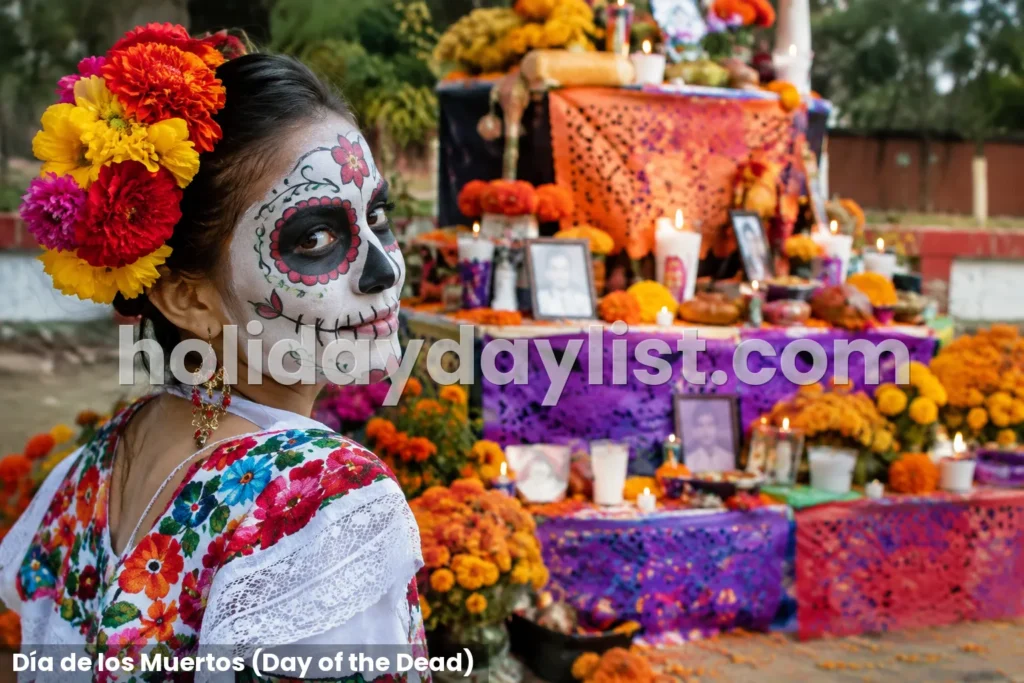
A familiar part of the celebration is the ofrenda, an altar or home display made in memory of a loved one. Families may place photographs, candles, flowers, and meaningful belongings on it. Favorite foods and drinks can also be included as a loving reminder of the person’s tastes and personality. An ofrenda is not meant to be a generic decoration; its details often reflect the individual being remembered.
Bright orange marigolds, known in Spanish as cempasúchil, are commonly used in decorations and on altars. Their vivid color and scent make them a recognizable part of the holiday. Families may also prepare pan de muerto, a sweet bread traditionally associated with Día de los Muertos. Recipes and shapes differ, and some communities have their own local specialties.
Skulls appear in many Día de los Muertos designs, from decorated sugar skulls to artwork and face paint. These images are often colorful and playful, reflecting the holiday’s way of facing death with affection, creativity, and remembrance. Their meaning depends on context, so they are best approached as part of a living cultural tradition rather than as spooky props.
Ways to celebrate with care
You can take part in Día de los Muertos in thoughtful, welcoming ways, whether or not you have Mexican heritage:
- Remember someone you love. Share a story, look through photographs, or prepare a favorite dish in their honor.
- Create a personal ofrenda. Include a photo and meaningful items, and explain to children or guests who the person was and why they are remembered.
- Learn before decorating. Explore the history and regional variety of the tradition through books, museums, cultural organizations, or community events led by Mexican and Mexican American voices.
- Make or enjoy pan de muerto. Try a recipe with family or support a local bakery offering the bread for the season.
- Attend a community celebration respectfully. Follow event guidance, ask before photographing people or private altars, and treat the occasion as a remembrance tradition rather than a costume theme.
- Invite conversation. Ask relatives about family memories, traditions, and the people whose lives helped shape your own.
Last updated October 25, 2026.
When is Día de los Muertos (Day of the Dead)?
Día de los Muertos (Day of the Dead): Every year on November 1 (for 2 days).
| Year | Date | Day of the week |
|---|---|---|
| 2026 | November 1 – November 2 | Sunday – Monday |
| 2027 | November 1 – November 2 | Monday – Tuesday |
| 2028 | November 1 – November 2 | Wednesday – Thursday |
| 2029 | November 1 – November 2 | Thursday – Friday |
| 2030 | November 1 – November 2 | Friday – Saturday |
Frequently asked questions
When is Día de los Muertos (Day of the Dead) in 2026?
Día de los Muertos (Day of the Dead) is on Sunday, November 1, 2026. After that, it falls on Monday, November 1, 2027. Every year on November 1 (for 2 days).
Is Día de los Muertos (Day of the Dead) a public holiday?
No. Día de los Muertos (Day of the Dead) is an observance, not an official public holiday, so schools and businesses stay open as usual.
How did Día de los Muertos begin?
Its exact origins are not captured by one simple starting point. The tradition developed through a blending of Indigenous practices honoring the dead and Catholic observances brought to Mexico during Spanish colonization.
What does Día de los Muertos celebrate?
Día de los Muertos honors loved ones who have died and keeps their stories present. Families and communities remember the departed by sharing memories and welcoming their presence in a joyful, colorful way.
How can you celebrate Día de los Muertos?
You can remember someone by sharing a story, preparing a favorite dish, or creating a personal ofrenda with photographs and meaningful belongings. You can also enjoy pan de muerto or attend a community celebration respectfully.