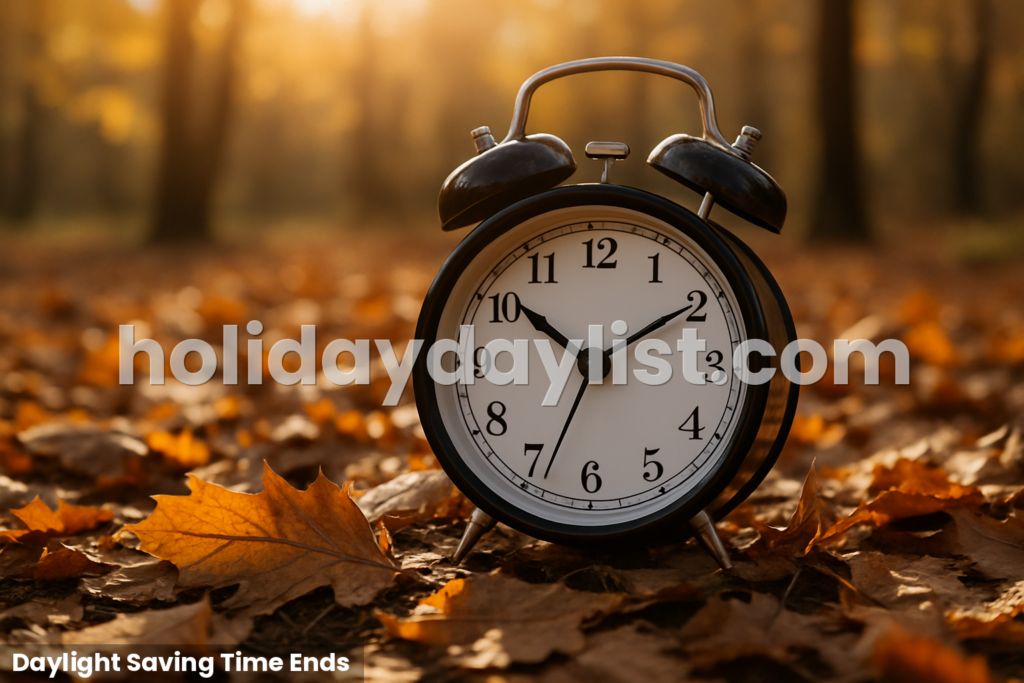
Daylight Saving Time Ends
What Does “Daylight Saving Time Ends” Mean?
When Daylight Saving Time ends in places that observe it, clocks are set back by one hour. In the United States, the change happens at 2 a.m. local time on the first Sunday in November; that hour repeats, creating an extra hour in the day. In 2026, the change falls on November 1.
That extra hour can feel like a small gift: a little more time for sleep, a leisurely breakfast, or one last chapter of a book. It also shifts an hour of daylight from the evening to the morning. Not every U.S. place observes Daylight Saving Time: NIST lists Hawaii, American Samoa, Guam, Puerto Rico, the Virgin Islands, and most of Arizona as exceptions. The Navajo Indian Reservation in Arizona does observe it.
Why Do Clocks Change?
Daylight Saving Time is the period when clocks are moved one hour ahead. NIST explains that the shift to Daylight Saving Time moves an hour of daylight from morning to evening; when clocks return to standard time, that hour moves from evening to morning. Daylight Saving Time was formally introduced in the United States in 1918. The current U.S. rules took effect in 2007.
People sometimes say we “gain” an hour in the fall and “lose” one in the spring. That’s a handy way to remember the clock adjustment: when Daylight Saving Time ends, the hour from 1 a.m. to 2 a.m. repeats. The clock labels change, but the sun’s schedule itself doesn’t.
Make the Most of the Extra Hour
The end of Daylight Saving Time offers a chance to slow down and ease into the darker evenings. Rather than letting the clock change catch everyone by surprise, make it a gentle seasonal reset.
- Enjoy a relaxed morning. Have breakfast together, take a walk, or savor a quiet cup of tea or cocoa.
- Check your clocks. Many computers and radio-controlled clocks can update automatically, but check clocks on ovens, cars, and other appliances.
- Check home safety basics. The clock change is a useful reminder to test smoke and carbon monoxide alarms and replace batteries if needed.
- Get ready for darker evenings. Add reflective details to evening walks, make sure outdoor lights work, and use care when driving at dusk.
- Welcome the season. Plan a cozy movie night, make a favorite soup, or bring out warm blankets and seasonal decorations.
A Small Change with a Big Conversation
People have mixed feelings about the clock change. Some appreciate the shift of daylight toward the morning after the switch, while others miss having more daylight in the evening. Adjusting sleep and daily routines can take time, especially for children, pets, and anyone whose work or travel schedule follows a strict timetable.
A gradual bedtime shift in the days before the change may help some households settle in. Keeping regular meal and sleep routines can also make the transition feel less abrupt. If you have appointments, transportation plans, or work shifts around the change, double-check the local time rules—particularly when traveling between regions.
Remembering the Date
In the United States, the familiar reminder is: “spring forward, fall back.” Daylight Saving Time ends at 2 a.m. local time on the first Sunday in November, when clocks move back one hour in places that observe the change. Other places may follow different rules or not change clocks, so November 1 is not a universal date.
However you spend that bonus hour, Daylight Saving Time’s end is a simple cue to check the clocks, prepare for earlier sunsets, and make room for a little seasonal comfort.
When is Daylight Saving Time Ends?
Daylight Saving Time Ends: Every year on the first Sunday of November.
| Year | Date | Day of the week |
|---|---|---|
| 2026 | November 1 | Sunday |
| 2027 | November 7 | Sunday |
| 2028 | November 5 | Sunday |
| 2029 | November 4 | Sunday |
| 2030 | November 3 | Sunday |
Reviewed by the Holiday List editorial team on October 21, 2026 · Last updated October 21, 2026.
Frequently asked questions
When is Daylight Saving Time Ends in 2026?
Daylight Saving Time Ends is on Sunday, November 1, 2026. After that, it falls on Sunday, November 7, 2027. Every year on the first Sunday of November.
Is Daylight Saving Time Ends a public holiday?
No. Daylight Saving Time Ends is an observance, not an official public holiday, so schools and businesses stay open as usual.
What does it mean when Daylight Saving Time ends?
In places that observe it, clocks move back one hour, and the hour from 1 a.m. to 2 a.m. repeats. This shifts an hour of daylight from the evening to the morning.
Why do clocks change when Daylight Saving Time ends?
Moving clocks back returns places to standard time and shifts daylight toward the morning. Daylight Saving Time was formally introduced in the United States in 1918, and current U.S. rules took effect in 2007.
How can you make the most of the extra hour?
Enjoy a relaxed breakfast, take a walk, or settle in for a cozy movie night. It’s also a useful time to check clocks, test smoke and carbon monoxide alarms, and prepare for darker evenings.
Sources
✓ Date matches National Institute of Standards and Technology: Daylight Saving Time Rules (checked automatically on October 12, 2026).