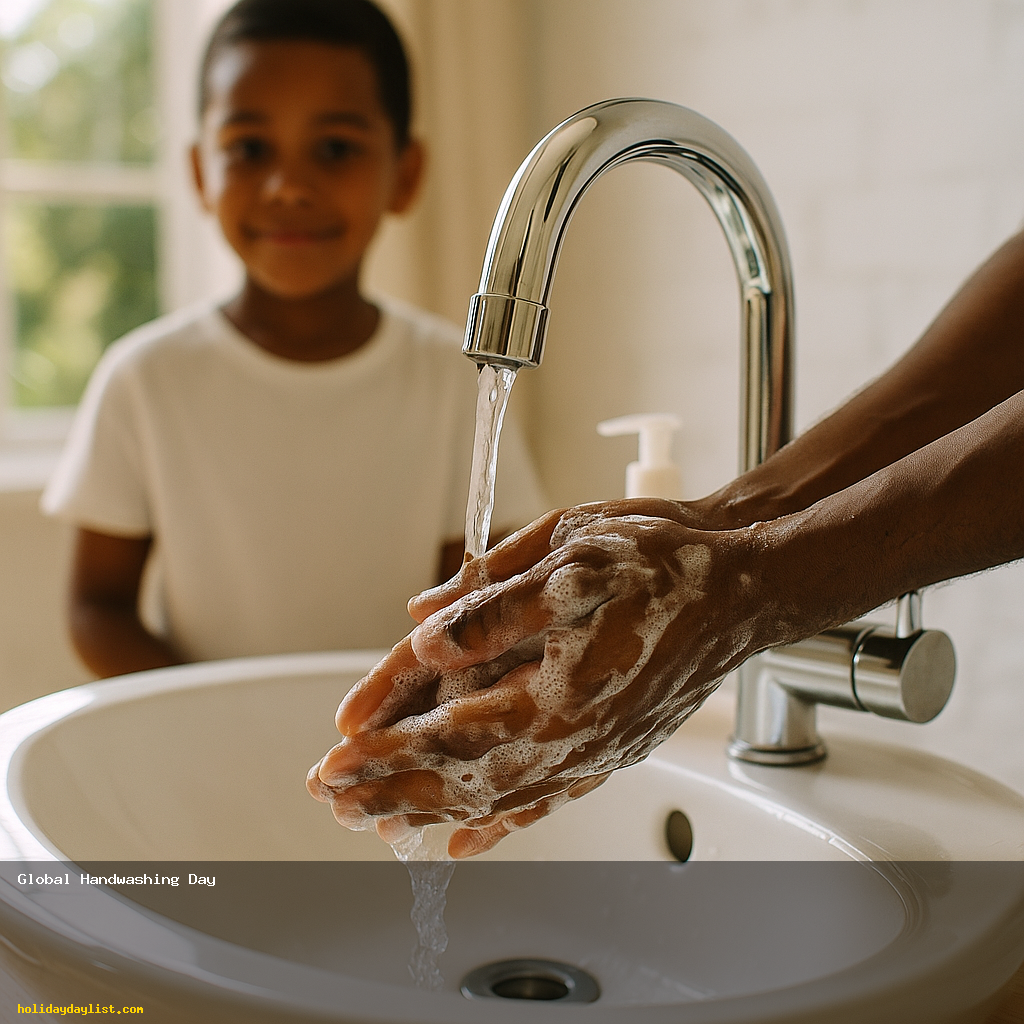
Global Handwashing Day
Global Handwashing Day – October 15
Global Handwashing Day is observed every year on October 15 to raise awareness about the importance of washing hands with soap and water. The international observance highlights handwashing as a simple, affordable way to help prevent illness and protect communities.
Good hand hygiene matters at home, at school, at work, in healthcare settings, and wherever people share spaces. Global Handwashing Day encourages individuals, families, schools, and organizations to make handwashing a regular habit and to improve access to the facilities needed to do it properly.
When Is Global Handwashing Day?
Global Handwashing Day takes place annually on October 15. It is a worldwide public health awareness observance, not an official public holiday.
Each year, communities and organizations use the occasion to share educational resources, organize demonstrations, promote access to soap and water, and encourage people to practice good hand hygiene throughout the year.
The History of Global Handwashing Day
The Global Handwashing Partnership established Global Handwashing Day in 2008 to encourage handwashing with soap and promote its role in preventing disease.
During the first observance, more than 120 million children in over 70 countries participated in activities focused on washing their hands with soap. Since then, the day has grown into an international awareness campaign involving governments, schools, nonprofit organizations, health professionals, and community groups.
The observance highlights not only personal hygiene but also the importance of access to clean water, soap, and suitable handwashing facilities. These resources are essential for making good hygiene possible in everyday life.
Why Handwashing Matters
Our hands come into contact with people, objects, food, and surfaces throughout the day. Germs can transfer to our hands and spread when we touch our eyes, nose, or mouth, prepare food, or interact with others.
Washing with soap and clean running water helps remove germs, dirt, and other unwanted substances from the hands. It is an important way to reduce the spread of respiratory and diarrheal illnesses.
Handwashing is especially important at key moments, including:
- Before, during, and after preparing food
- Before eating
- After using the toilet
- After changing diapers or helping a child use the toilet
- After coughing, sneezing, or blowing your nose
- Before and after caring for someone who is sick
- After touching animals, animal feed, or animal waste
- After handling garbage
Making handwashing a routine habit helps protect individuals and the people around them.
How to Wash Your Hands Properly
The Centers for Disease Control and Prevention recommends five basic steps for washing hands with soap and water.
- Wet: Wet your hands with clean, running water.
- Lather: Apply soap and rub your hands together to create a lather.
- Scrub: Scrub all surfaces, including the backs of your hands, between your fingers, and under your nails, for at least 20 seconds.
- Rinse: Rinse your hands thoroughly under clean, running water.
- Dry: Dry your hands with a clean towel or let them air-dry.
If soap and water are not readily available, an alcohol-based hand sanitizer containing at least 60% alcohol is a useful alternative in many everyday situations. Soap and water are preferable when hands are visibly dirty or greasy.
The Global Challenge of Hand Hygiene
Although handwashing is a familiar everyday activity for many people, access to soap and water is not universal.
In an announcement published on October 15, 2025, the World Health Organization and UNICEF reported that an estimated 1.7 billion people lacked basic hand hygiene services at home in 2024. This included 611 million people with no handwashing facility at all.
Limited access can make it difficult for families, schoolchildren, healthcare workers, and communities to maintain good hygiene. Addressing this challenge requires more than individual awareness: it also requires investment in water supplies, sanitation, soap, and accessible facilities.
Global Handwashing Day helps draw attention to these inequalities and encourages governments and organizations to make hand hygiene possible for everyone.
Ways to Celebrate Global Handwashing Day
Anyone can take part in Global Handwashing Day. Small activities can help reinforce good habits and spread awareness.
- Practice proper handwashing: Review the five steps and make sure everyone in your household knows when to wash their hands.
- Teach children through activities: Use a simple demonstration, poster, or handwashing song to make learning engaging.
- Organize a school event: Teachers can hold a short lesson, quiz, or classroom activity about hygiene and disease prevention.
- Share educational messages: Post reminders about handwashing on community bulletin boards, newsletters, or social media.
- Check local facilities: Schools, workplaces, and community organizations can review whether soap, water, and suitable handwashing facilities are available.
- Support hygiene initiatives: Learn about organizations working to improve access to clean water and sanitation.
- Lead by example: Wash your hands at the right times and encourage others without shaming or embarrassing them.
- Make handwashing convenient: Keep soap available near sinks and help children reach handwashing facilities safely.
The aim is not just to celebrate for one day, but to encourage habits and improvements that continue throughout the year.
Global Handwashing Day at Schools and Workplaces
Schools are important places to promote handwashing because children share classrooms, equipment, bathrooms, and play areas. Teachers can build handwashing into daily routines, particularly after bathroom breaks and before meals.
Workplaces can also support hand hygiene by ensuring that washrooms and food preparation areas have soap and running water. Clear reminders near sinks and convenient facilities can make good hygiene easier for staff and visitors.
Healthcare settings require particular attention to hand hygiene because patients may be vulnerable to infections. Staff and visitors should follow the hand hygiene guidance appropriate to their setting.
Across all these environments, education works best when people have the facilities and supplies needed to put it into practice.
Interesting Facts About Global Handwashing Day
- It began in 2008. The Global Handwashing Partnership established the first Global Handwashing Day.
- The first observance reached millions of children. More than 120 million children participated in over 70 countries during the inaugural year.
- October 15 is the annual date. The observance is held on the same date each year.
- Handwashing is a public health measure. It helps reduce the spread of germs that can cause respiratory and diarrheal illnesses.
- Soap and water are important together. Soap helps loosen and remove dirt, germs, and other substances from the hands.
- Access remains unequal. Many households around the world still lack basic handwashing services, making hygiene an infrastructure and public health issue as well as a personal habit.
Make Clean Hands a Daily Habit
Global Handwashing Day on October 15 reminds us that a simple daily habit can make a meaningful contribution to public health. Washing hands with soap and water helps reduce the spread of germs, while access to clean water and suitable facilities makes this practice possible.
Celebrate the day by reviewing your handwashing routine, teaching children healthy habits, or supporting efforts to improve access to hygiene facilities. The most important step is to keep the habit going long after October 15 has passed.
This page is for general awareness and isn't medical advice. For questions about your own health, talk to a doctor or other healthcare professional.
When is Global Handwashing Day?
Global Handwashing Day: Every year on October 15.
| Year | Date | Day of the week |
|---|---|---|
| 2027 | October 15 | Friday |
| 2028 | October 15 | Sunday |
| 2029 | October 15 | Monday |
| 2030 | October 15 | Tuesday |
| 2031 | October 15 | Wednesday |
Reviewed by the Holiday List editorial team on October 13, 2026 · Last updated October 16, 2026.
Frequently asked questions
When is Global Handwashing Day in 2027?
Global Handwashing Day is on Friday, October 15, 2027. After that, it falls on Sunday, October 15, 2028. Every year on October 15.
Is Global Handwashing Day a public holiday?
No. Global Handwashing Day is an observance, not an official public holiday, so schools and businesses stay open as usual.
What is Global Handwashing Day?
Global Handwashing Day promotes handwashing with soap as a simple, effective, and affordable way to help prevent disease and save lives. It has been observed every October 15 since 2008.
How did Global Handwashing Day start?
The Global Handwashing Partnership founded the day, and its first observance was held in 2008. It encourages people and communities to promote handwashing with soap at important times.
How can I celebrate Global Handwashing Day?
Practice handwashing with soap and water, or remind others when it matters, such as after using the bathroom and before eating or preparing food. You can also make awareness posters, share reminders online, teach children a handwashing song, or distribute handwashing kits.
Sources
- Global Handwashing Partnership: About Global Handwashing Day
- UNICEF: Handwashing
- CDC: Global Handwashing Day
✓ Date matches Global Handwashing Partnership: About Global Handwashing Day (checked automatically on October 12, 2026).