National Mushroom Day
Celebrate National Mushroom Day on October 15!
National Mushroom Day is observed on October 15 and celebrates the many ways mushrooms enrich our food, culture, and natural environment. From familiar white button mushrooms and shiitake to unusual wild varieties, mushrooms come in an extraordinary range of shapes, flavors, and textures.
Mushrooms are valued in kitchens around the world, but their importance extends beyond the dinner table. Fungi help break down organic material, recycle nutrients, and support the health of many ecosystems.
National Mushroom Day is a chance to try a new recipe, learn about fungi, visit a local market, or discover the science behind these fascinating organisms.
When Is National Mushroom Day?
National Mushroom Day is observed annually on October 15. It is a food-themed observance rather than a public holiday, and celebrations are generally informal.
The day is a convenient opportunity for mushroom enthusiasts, home cooks, growers, and curious nature lovers to explore the culinary and ecological importance of fungi.
The History of National Mushroom Day
The modern origins of National Mushroom Day are not consistently documented, so it is difficult to identify a definitive founder or establishment year with confidence. October 15 is widely listed as the date of the observance by holiday calendars.
Although the modern celebration has an uncertain origin, people have gathered and cultivated mushrooms for food for centuries. Mushrooms feature in culinary traditions around the world, with different cultures developing distinctive ways to prepare, preserve, and enjoy them.
Commercial mushroom growing has also become an important part of modern agriculture. Growers produce familiar varieties for supermarkets, restaurants, and local markets, while researchers continue to investigate the biology and ecological roles of fungi.
National Mushroom Day brings these culinary, agricultural, and scientific interests together in a simple celebration of mushrooms.
Why Mushrooms Matter
Mushrooms are more than a flavorful ingredient. They are the visible fruiting bodies of certain fungi, and they play important roles in nature.
Nutrition
Edible mushrooms are generally low in calories and can provide nutrients such as B vitamins, minerals, and dietary fiber. Their exact nutritional content varies by species, growing conditions, preparation, and cooking method.
Some mushrooms contain vitamin D, and exposure to ultraviolet light can increase the vitamin D content of certain varieties. Mushrooms can be part of a varied, balanced diet, although no single food guarantees a particular health outcome.
Flavor and cooking
Mushrooms are known for their savory umami flavor. They can add depth to soups, sauces, stir-fries, pasta, rice dishes, omelets, and many plant-based meals.
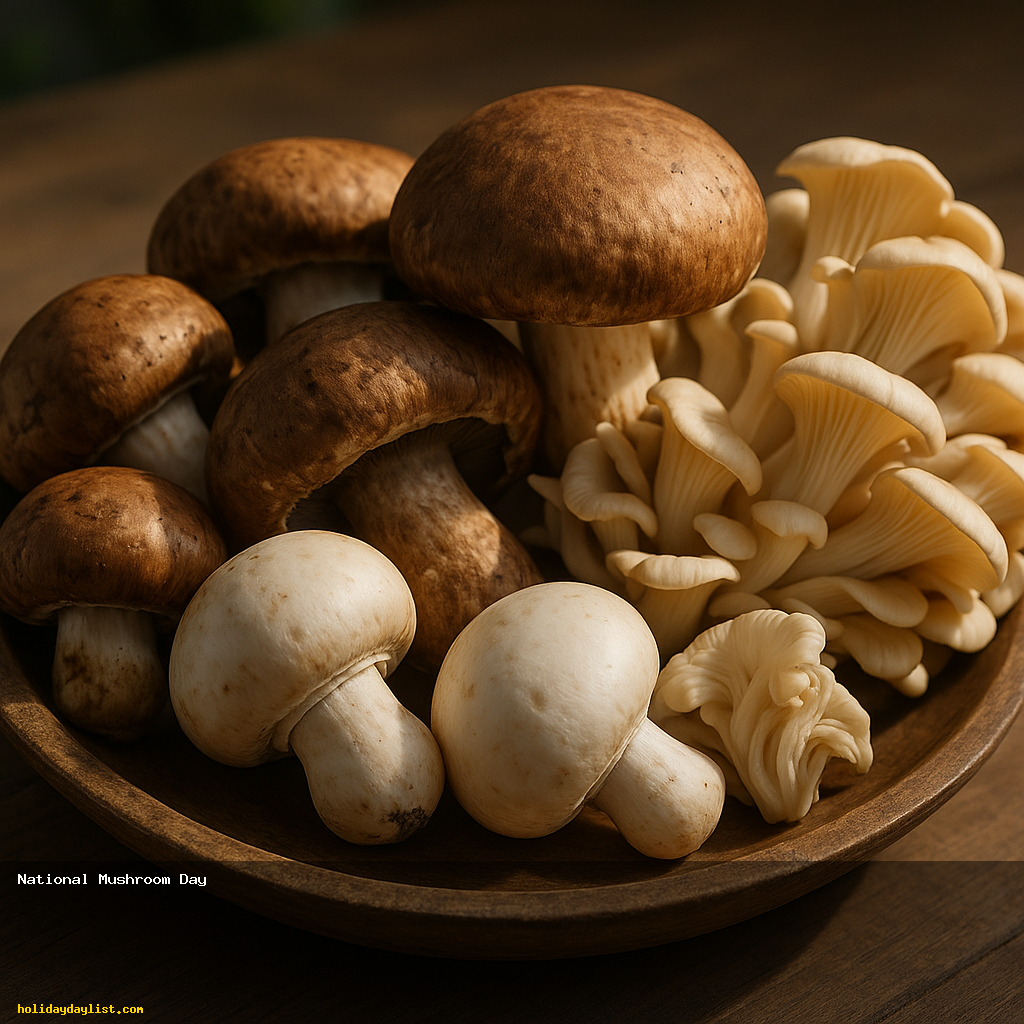
Different varieties have distinct textures and flavors. Button mushrooms are versatile, shiitake mushrooms have a rich savoury taste, and oyster mushrooms can develop a tender texture when cooked.
Ecosystems
Many fungi act as decomposers, breaking down dead wood, leaves, and other organic material. This process returns nutrients to the environment.
Other fungi form relationships with plant roots that help plants obtain water and nutrients. These connections contribute to the functioning of many terrestrial ecosystems.
Agriculture and local food
Mushroom cultivation supports growers, suppliers, markets, and restaurants. Exploring locally grown varieties can introduce consumers to different flavours while helping them learn about how mushrooms are produced.
Fun Facts About Mushrooms
- Mushrooms are fungi, not plants. Fungi belong to a separate biological kingdom.
- The visible mushroom is only part of the organism. Many fungi grow through a network of threadlike structures called mycelium, often hidden in soil, wood, or other material.
- Some fungi glow naturally. Certain bioluminescent fungi produce light through a chemical reaction.
- A huge fungus lives in Oregon. A honey fungus clone covering approximately 2,385 acres has been documented in the Malheur National Forest area and is often described as one of the world’s largest known organisms.
- Mushrooms can have very different nutritional profiles. Species, growing conditions, and ultraviolet exposure can affect their nutrient content.
- Not all mushrooms are edible. Some wild species are poisonous, and a few can cause severe or fatal poisoning.
Ways to Celebrate National Mushroom Day
You don’t need to be a mushroom expert to take part. Here are some easy ways to celebrate October 15.
- Cook a mushroom dish: Make mushroom soup, risotto, pasta, stuffed mushrooms, or a savoury stir-fry.
- Try a different variety: Look for shiitake, oyster, cremini, or another cultivated edible mushroom at a grocery store or farmers’ market.
- Visit a local market: Learn where mushrooms are grown and which varieties are available in your area.
- Learn about fungi: Read about mycelium, decomposition, or the relationships between fungi and plant roots.
- Explore mushroom recipes: Experiment with seasonings and cooking methods to discover how different mushrooms taste.
- Share a meal: Prepare a mushroom-based dish for friends or family and compare favourite varieties.
- Watch a nature documentary: Explore the role fungi play in forests, soil, and other ecosystems.
- Support mushroom growers: Consider buying locally grown mushrooms when available.
If you are interested in wild mushrooms, consider joining a guided educational walk led by a knowledgeable local expert. Never eat a wild mushroom based only on an online photograph, an app identification, or an uncertain guess. Some poisonous mushrooms closely resemble edible species.
Mushroom Varieties to Try
Different mushrooms work well in different dishes. If you’re celebrating National Mushroom Day with food, these cultivated varieties are useful starting points:
- White button mushrooms: Mild and versatile, suitable for salads, soups, sauces, and everyday cooking.
- Cremini mushrooms: Similar to button mushrooms but often with a deeper flavour; useful in pasta, omelets, and sautés.
- Portobello mushrooms: Large caps with a substantial texture that can be grilled, roasted, or stuffed.
- Shiitake mushrooms: Savoury mushrooms often used in soups, stir-fries, and many East Asian dishes.
- Oyster mushrooms: Delicate, tender mushrooms that work well when sautéed or roasted.
- Enoki mushrooms: Long, slender mushrooms commonly used in soups and hot pots.
Buy mushrooms identified as edible by a reputable seller, and follow appropriate storage and cooking guidance.
Frequently Asked Questions
When is National Mushroom Day?
National Mushroom Day is observed each year on October 15.
Who created National Mushroom Day?
A definitive founder and establishment date are not consistently documented in reliable sources. It is best to avoid attributing the observance to a specific person or organization without stronger evidence.
Why do people celebrate National Mushroom Day?
The observance highlights mushrooms as a food, encourages people to try new recipes and varieties, and offers an opportunity to learn about fungi and their ecological roles.
Are mushrooms healthy?
Edible mushrooms can contribute nutrients such as B vitamins, minerals, and dietary fibre to a balanced diet. Nutritional content varies by type, and claims about specific health benefits should be considered in light of the available scientific evidence.
Are mushrooms plants?
No. Mushrooms are fungi, a separate group of organisms. Many fungi grow as networks of microscopic threads, with mushrooms serving as reproductive structures for certain species.
Can you forage for mushrooms to celebrate?
You can learn about wild mushrooms with an experienced guide, but foraging requires careful identification. Never eat a wild mushroom unless its identity and edibility have been established with confidence by a qualified expert.
Is National Mushroom Day an official public holiday?
No. It is an informal food observance and does not generally involve public closures or a day off work.
Celebrate the Wonderful World of Mushrooms
National Mushroom Day on October 15 is a reminder to appreciate mushrooms in all their variety. They bring flavor and texture to meals, support food-growing industries, and play important roles in natural ecosystems.
Celebrate by cooking a favourite mushroom dish, trying a new cultivated variety, visiting a local market, or learning something new about fungi. Whether your interest is culinary, scientific, or simply curious, mushrooms offer plenty to explore.
When is National Mushroom Day?
- Thursday, October 15, 2026
- Friday, October 15, 2027
- Sunday, October 15, 2028
Reviewed by the Holiday List editorial team on October 13, 2026 · Last updated October 13, 2026.
Frequently asked questions
When is National Mushroom Day in 2026?
National Mushroom Day is on Thursday, October 15, 2026. After that, it falls on Friday, October 15, 2027. Every year on October 15.
Is National Mushroom Day a public holiday?
No. National Mushroom Day is an observance, not an official public holiday, so schools and businesses stay open as usual.
What is National Mushroom Day?
National Mushroom Day celebrates mushrooms, with the Australian Mushroom Growers Association highlighting Australian-grown mushrooms and the Mushroom Council encouraging people to enjoy mushroom dishes. It’s also a chance to appreciate their savory flavor and versatility in cooking.
How did National Mushroom Day start?
The exact origin of National Mushroom Day isn’t well documented. The Australian Mushroom Growers Association and the Mushroom Council both mark October 15 as a day to celebrate mushrooms.
How can you celebrate National Mushroom Day?
Cook a mushroom-themed meal, try a variety you haven’t tasted before, or share a favorite recipe or cooking tip. You could also invite friends and family to sample mushroom dishes.
Sources
- Australian Mushroom Growers Association: National Mushroom Day
- Mushroom Council: Happy National Mushroom Day!
- U.S. Congress, H. Res. 1184
✓ Date verified against Australian Mushroom Growers Association: National Mushroom Day on October 13, 2026.