Unthanksgiving Day
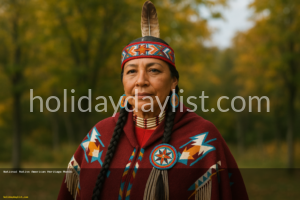
Unthanksgiving Day is observed on November 26, the same date as Thanksgiving in the United States. It’s a day for reflecting on the effects of colonization on Indigenous peoples and for hearing perspectives that are often left out of familiar Thanksgiving stories. Some gatherings also honor Indigenous survival, culture and sovereignty.
How Unthanksgiving Day started
The exact origin of the name “Unthanksgiving Day” and its observance on November 26 are not well documented. The day is associated with Indigenous-led gatherings and with efforts to question celebratory accounts of the holiday that overlook the history of Native communities.
One well-known related gathering is the Indigenous Peoples Sunrise Ceremony on Alcatraz Island in San Francisco Bay. It takes place on Thanksgiving morning and is organized by the International Indian Treaty Council. The ceremony recalls the 1969 occupation of Alcatraz by Native activists, who called attention to Indigenous rights and the federal government’s broken treaty obligations. Unthanksgiving Day and the Alcatraz ceremony are connected in their focus on history and Indigenous voices, though the names and observances aren’t interchangeable everywhere.
What the day asks people to consider
For many people, Thanksgiving is a family holiday centered on a meal and gratitude. Unthanksgiving Day invites a fuller account of the past, including the arrival of English settlers in New England, conflicts over land, and the lasting consequences of colonization for Indigenous nations. It also challenges the idea that Native people belong only to the distant past.
Indigenous communities are diverse, with distinct nations, languages, histories and traditions. There isn’t one single Indigenous perspective on Thanksgiving or one way to mark November 26. Some people take part in public gatherings, while others observe privately or focus on learning. Listening to Indigenous writers, educators and community members can help make the day more thoughtful than relying on simplified classroom stories.
The Alcatraz Sunrise Ceremony is one example of a public observance. Participants gather before dawn, and the event includes prayer, cultural expression and messages about Indigenous rights. Its setting is significant: Alcatraz was occupied by Native activists from 1969 to 1971, an action that helped bring attention to Indigenous sovereignty and treaty issues.
Ways to observe Unthanksgiving Day
- Read a history of the Indigenous nation whose land you live on. Look for information from the nation itself, such as its official website or cultural center.
- Listen to Indigenous speakers, musicians or storytellers, and seek out work by Native authors. Give proper attention to who created it and the community they represent.
- If you’re near San Francisco, learn about the Indigenous Peoples Sunrise Ceremony through the International Indian Treaty Council before attending. Check current event details and any guidance for visitors.
- Talk with family or friends about how Thanksgiving is taught and remembered. Make room for different viewpoints, especially those shared by Indigenous people.
- Support an Indigenous-led organization, cultural program or local business. Choose one whose work and goals you’ve taken time to understand.
- For a quieter observance, set aside time to learn about treaties, Native sovereignty or the history of Alcatraz. Share what you learn accurately, without treating one source or story as representative of every Indigenous nation.
Last updated November 19, 2026.
When is Unthanksgiving Day?
Unthanksgiving Day: Every year on the fourth Thursday of November.
| Year | Date | Day of the week |
|---|---|---|
| 2026 | November 26 | Thursday |
| 2027 | November 25 | Thursday |
| 2028 | November 23 | Thursday |
| 2029 | November 22 | Thursday |
| 2030 | November 28 | Thursday |
📄 Free printable 2027 holiday calendar · 📅 Every holiday in 2027, month by month
Frequently asked questions
When is Unthanksgiving Day in 2026?
Unthanksgiving Day is on Thursday, November 26, 2026. After that, it falls on Thursday, November 25, 2027. Every year on the fourth Thursday of November.
Is Unthanksgiving Day a public holiday?
No. Unthanksgiving Day is an observance, not an official public holiday, so schools and businesses stay open as usual.
What is Unthanksgiving Day?
Unthanksgiving Day is observed on November 26, the same date as Thanksgiving in the United States. It invites reflection on colonization’s effects on Indigenous peoples and attention to Indigenous history, culture and sovereignty.
How did Unthanksgiving Day begin?
The exact origin of the name and observance isn’t well documented. The day is associated with Indigenous-led gatherings that question celebratory accounts of Thanksgiving and highlight Indigenous voices.
How can people observe Unthanksgiving Day?
You can learn about the Indigenous nation whose land you live on, listen to Indigenous speakers and artists, or discuss how Thanksgiving is taught and remembered. In San Francisco, the Indigenous Peoples Sunrise Ceremony on Alcatraz Island is a public observance; check with the International Indian Treaty Council for current details.
Sources
Related holidays

🎂 Find out what's celebrated on your birthday →