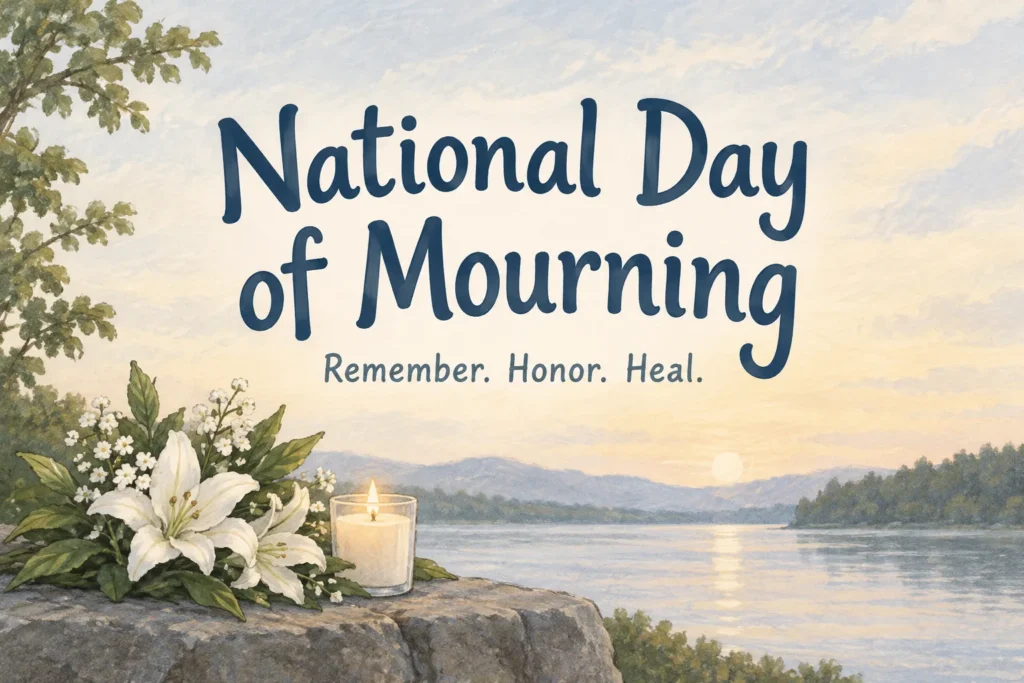
National Day of Mourning
National Day of Mourning is observed on November 26 by many Indigenous people and their supporters. It is a day of remembrance and protest, honoring Indigenous ancestors and communities while drawing attention to the harm caused by colonization and the continuing struggles of Indigenous peoples.
How the day started
The National Day of Mourning began in 1970 in Plymouth, Massachusetts. The United American Indians of New England organized the first observance after Wamsutta Frank James, a Wampanoag leader, was invited to speak at a state dinner marking the 350th anniversary of the Pilgrims’ arrival. His prepared remarks, which described the impact of colonization on Native people, were not accepted by event organizers. He was not allowed to deliver them.
Instead, James and other Indigenous people gathered at Cole’s Hill, overlooking Plymouth Rock, for a public observance. The annual gathering has continued there, organized by the United American Indians of New England. November 26 is the date specified for this article’s observance; the in-person gathering in Plymouth is held on Thanksgiving Day.
What the observance means
For participants, the day is a time to remember Indigenous people who have died through violence, disease, displacement and other consequences of colonization. It also makes space to speak about living communities and present-day issues, including the protection of Indigenous land, culture and sovereignty.
The observance offers a different perspective on the history often told around Thanksgiving. The familiar story of Pilgrims and Wampanoag people sharing a meal leaves out much of what followed, including the loss of Native land and the severe pressures placed on Indigenous communities. The National Day of Mourning asks people to consider those experiences alongside the stories they may have learned as children.
It’s a day for listening as well as remembering. Indigenous people have diverse histories, nations and points of view, so no single observance can speak for everyone. The gathering in Plymouth is one specific community’s tradition, rooted in the history of the Wampanoag homeland and the events that gave rise to the day.
Ways to take part respectfully
- Learn about the Indigenous nations connected to where you live. Look for information from those nations or from Indigenous-led cultural and educational organizations.
- Read or listen to Indigenous accounts of local and national history. Consider how these accounts differ from familiar Thanksgiving narratives.
- If you’re in Plymouth, check current information from the United American Indians of New England before attending the gathering. Follow event guidance and treat the observance as a solemn public act, not a tourist attraction.
- For families, discuss what children have been taught about Thanksgiving and add age-appropriate material about Indigenous history and present-day communities. Leave room for questions rather than treating one conversation as the whole story.
- Support Indigenous-led work by sharing its materials, attending public events when invited, or learning about the priorities of nearby Indigenous communities.
Last updated November 19, 2026.
When is National Day of Mourning?
National Day of Mourning: Every year on the fourth Thursday of November.
| Year | Date | Day of the week |
|---|---|---|
| 2026 | November 26 | Thursday |
| 2027 | November 25 | Thursday |
| 2028 | November 23 | Thursday |
| 2029 | November 22 | Thursday |
| 2030 | November 28 | Thursday |
📄 Free printable 2027 holiday calendar · 📅 Every holiday in 2027, month by month
Frequently asked questions
When is National Day of Mourning in 2026?
National Day of Mourning is on Thursday, November 26, 2026. After that, it falls on Thursday, November 25, 2027. Every year on the fourth Thursday of November.
Is National Day of Mourning a public holiday?
No. National Day of Mourning is an observance, not an official public holiday, so schools and businesses stay open as usual.
What is National Day of Mourning?
National Day of Mourning is a remembrance and protest observance honoring Indigenous ancestors and communities. It also draws attention to the harms of colonization and the ongoing struggles of Indigenous peoples.
How did National Day of Mourning begin?
The observance began in 1970 in Plymouth, Massachusetts, after Wampanoag leader Wamsutta Frank James was not allowed to deliver his prepared remarks at a state dinner. He and other Indigenous people gathered at Cole’s Hill for a public observance.
How can I observe National Day of Mourning respectfully?
Learn about the Indigenous nations connected to where you live, and seek out Indigenous accounts of history. If you attend the Plymouth gathering, check current guidance from the United American Indians of New England and treat it as a solemn public act.