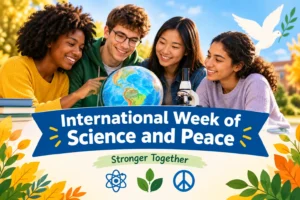
World Science Day for Peace and Development
World Science Day for Peace and Development is observed each year on November 10. Led by UNESCO, it highlights science’s role in society and encourages the public to take part in debates about scientific issues. The day also draws attention to how science relates to daily life and to building more sustainable societies.
How the day started
According to UNESCO, it proclaimed World Science Day for Peace and Development in 2001. Since then, the observance has brought attention to science and encouraged people across society to engage with scientific debates and activities.
UNESCO says the day also aims to keep citizens informed about developments in science and make science more accessible. It has helped support projects and programs around the world, as well as cooperation between scientists in regions affected by conflict.
Science, peace and development
Science can help communities understand challenges and make informed choices. It supports work in areas such as food security, clean water, health, energy and climate. Scientific knowledge is most useful when people can access it, question it and apply it in ways that respect human rights and local needs.
Peace is part of the day’s message, too. International scientific partnerships can bring people and institutions together across borders. UNESCO notes that the observance has helped foster cooperation between scientists in regions affected by conflict. Sharing knowledge and working on common problems can build understanding, though science alone cannot resolve political conflicts or guarantee fair outcomes. Ethical standards, open discussion and public participation matter alongside discoveries and technology.
Each year, UNESCO gives the observance a particular theme. Themes have focused on topics such as the role of science in sustainable development and the relationship between science and society. Events may include public talks, classroom activities, exhibitions and discussions with researchers. The format varies by country and organization, so local universities, museums and science groups are good places to check for nearby programs.
Ways to take part
- Attend a public lecture, museum program or community science event. Ask how the topic connects to people’s lives and what questions remain unanswered.
- Explore a scientific issue through a reliable source, such as a university, science museum or international organization. Compare explanations and notice how evidence is presented.
- Try a simple observation activity with children or friends. Track the Moon’s changing appearance, compare the temperature in sunny and shaded spots, or watch how a plant responds to light. Record what you notice rather than rushing to a conclusion.
- Invite a scientist, teacher or technical professional to speak with a class or community group. A conversation about how they test ideas can make the scientific process feel more approachable.
- Discuss how science affects a local decision, such as water use, public transport or energy planning. Consider whose experiences are included and how evidence can help inform the choice.
- Share a clear, trustworthy science resource with someone who might find it useful. Include the source so readers can check the information for themselves.
When is World Science Day for Peace and Development?
World Science Day for Peace and Development: Every year on November 10.
| Year | Date | Day of the week |
|---|---|---|
| 2027 | November 10 | Wednesday |
| 2028 | November 10 | Friday |
| 2029 | November 10 | Saturday |
| 2030 | November 10 | Sunday |
| 2031 | November 10 | Monday |
📄 Free printable 2027 holiday calendar · 📅 Every holiday in 2027, month by month
Reviewed by the Holiday Day List editorial team on November 4, 2026 · Last updated November 4, 2026.
Frequently asked questions
When is World Science Day for Peace and Development in 2027?
World Science Day for Peace and Development is on Wednesday, November 10, 2027. After that, it falls on Friday, November 10, 2028. Every year on November 10.
Is World Science Day for Peace and Development a public holiday?
No. World Science Day for Peace and Development is an observance, not an official public holiday, so schools and businesses stay open as usual.
What is World Science Day for Peace and Development?
Led by UNESCO, it highlights science’s role in society and encourages public participation in discussions about scientific issues. The observance also draws attention to how science connects with daily life and sustainable societies.
How did World Science Day for Peace and Development start?
UNESCO proclaimed the observance in 2001. Since then, it has aimed to make science more accessible and encourage people across society to engage with scientific debates and activities.
How can you take part in World Science Day for Peace and Development?
Attend a public lecture, museum program or community science event, or try a simple observation activity such as tracking the Moon’s appearance. You can also discuss how scientific evidence relates to a local issue, such as water use or energy planning.
Sources
- UNESCO: World Science Day for Peace and Development
- United Nations: World Science Day for Peace and Development
- United Nations: World Science Day for Peace and Development
✓ Date matches UNESCO: World Science Day for Peace and Development (checked automatically on November 4, 2026).