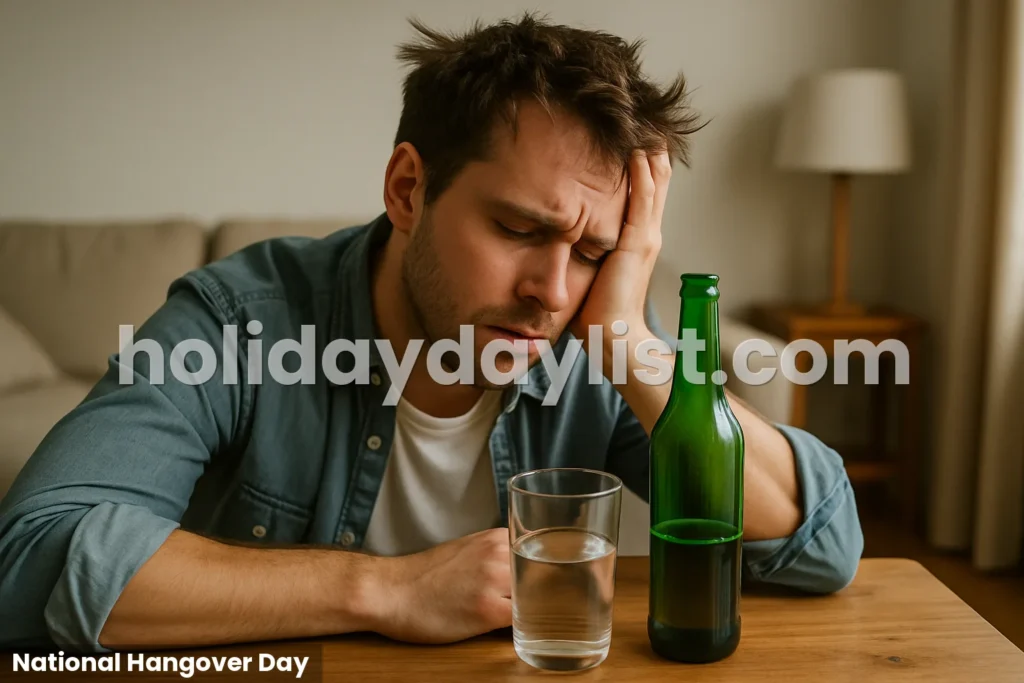
National Hangover Day
National Hangover Day is observed on January 1, the morning after New Year’s Eve celebrations. It offers a lighthearted name for a familiar possibility after a night of drinking: waking up feeling less than your best. The day is also a timely reminder that the new year can begin with rest, water, and a little extra care.
How National Hangover Day Started
The exact origin of National Hangover Day is not well documented, so it’s best not to credit it to a particular founder or organization. Its date makes the idea easy to understand: New Year’s Eve is a popular time for parties and toasts, and January 1 is when some revelers may feel the effects. The observance is generally treated as an informal, playful nod to that post-celebration experience—not as an official government holiday.
The Day After New Year’s Eve
A hangover can involve symptoms such as headache, nausea, thirst, tiredness, or sensitivity to light and sound. People’s experiences vary, and the discomfort may interfere with ordinary plans. Despite familiar claims about quick fixes, there is no instant cure. Rest and time are often the most helpful responses; drinking more alcohol is not a safe remedy.
National Hangover Day can also be a chance to think about how we celebrate. Alcohol affects people differently, and not everyone drinks. A welcoming New Year’s gathering can include appealing nonalcoholic options, food, comfortable places to sit, and a plan for getting home safely. No one should feel pressured to drink in order to join the celebration.
Simple Ways to Observe National Hangover Day
- Take it easy. If you’re tired or feeling unwell, keep the day’s plans gentle and allow time to rest.
- Drink water and eat something nourishing. These can support general comfort, though they do not instantly cure a hangover. Choose food that sounds manageable, and avoid promising yourself that a particular remedy will work.
- Make a cozy recovery plan. Put on comfortable clothes, enjoy a quiet show or book, and postpone nonessential errands if you can.
- Check in on friends. Send a kind message to anyone who celebrated with you, or offer practical help such as bringing over a meal or a bottle of water.
- Make next year’s celebration more inclusive. If you host, offer appealing alcohol-free drinks alongside other choices, serve food, and arrange safe rides or transit plans ahead of time.
- Know when to seek help. Severe symptoms, trouble waking, confusion, seizures, or slow or irregular breathing after drinking can signal alcohol poisoning. Call emergency services right away rather than waiting for someone to sleep it off.
Last updated October 20, 2026.
When is National Hangover Day?
National Hangover Day: Every year on January 1.
| Year | Date | Day of the week |
|---|---|---|
| 2027 | January 1 | Friday |
| 2028 | January 1 | Saturday |
| 2029 | January 1 | Monday |
| 2030 | January 1 | Tuesday |
| 2031 | January 1 | Wednesday |
📄 Free printable 2027 holiday calendar · 📅 Every holiday in 2027, month by month
Frequently asked questions
When is National Hangover Day in 2027?
National Hangover Day is on Friday, January 1, 2027. After that, it falls on Saturday, January 1, 2028. Every year on January 1.
Is National Hangover Day a public holiday?
No. National Hangover Day is an observance, not an official public holiday, so schools and businesses stay open as usual.
How did National Hangover Day start?
Its exact origin is not well documented, so it is not credited to a particular founder or organization. It is an informal, playful observance tied to the day after New Year’s Eve celebrations.
What does National Hangover Day celebrate?
Observed on January 1, it recognizes the possibility of feeling unwell after a night of drinking. It also encourages rest, water, and extra care at the start of the new year.
How can you observe National Hangover Day?
Take it easy, rest, drink water, and eat something nourishing; these may support comfort but do not instantly cure a hangover. You can also check in on friends or plan more inclusive, safer celebrations for next year.