Kwanzaa
Kwanzaa is a joyful, weeklong celebration of African heritage, community, and shared values. It begins each year on December 26 and continues for 7 days, bringing families and friends together for reflection, storytelling, music, food, and traditions that look toward a hopeful new year.
What Kwanzaa celebrates
Kwanzaa was created in 1966 by Maulana Karenga as a cultural holiday honoring African American and Pan-African heritage. Its name comes from the Swahili phrase matunda ya kwanza, meaning “first fruits.” The celebration draws inspiration from harvest traditions found across African cultures, while its customs and meaning have developed as a distinct modern observance.
At the heart of Kwanzaa are the Nguzo Saba, or Seven Principles. Each day of the holiday highlights one principle, offering a simple theme for conversation and reflection:
- Umoja (Unity): Building and maintaining unity in family, community, nation, and the wider African diaspora.
- Kujichagulia (Self-Determination): Defining ourselves, naming ourselves, and shaping our own paths.
- Ujima (Collective Work and Responsibility): Working together to solve problems and strengthen the community.
- Ujamaa (Cooperative Economics): Supporting businesses and economic efforts that benefit the community.
- Nia (Purpose): Connecting personal goals with the well-being and growth of the community.
- Kuumba (Creativity): Using our talents to make the world around us more beautiful and beneficial.
- Imani (Faith): Believing in family, community, heritage, and the possibilities of a brighter future.
Symbols and traditions
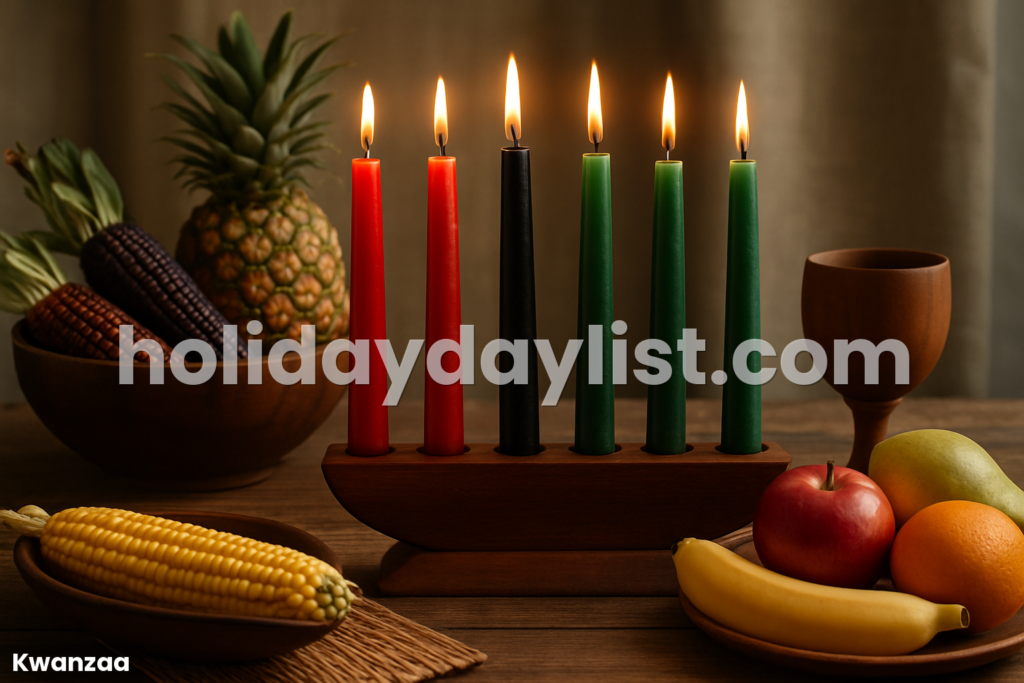
Many households celebrate Kwanzaa with a display called the mkeka, a woven mat that serves as the foundation for other symbolic items. These may include fruits and vegetables, ears of corn, a unity cup, and the kinara, a candleholder for seven candles called mishumaa saba. The candles are red, black, and green—colors often associated with African heritage and the holiday.
A candle is lit each day, accompanied by discussion of that day’s principle. Families may share a greeting in Swahili: “Habari gani?” (“What’s the news?”), answered with the principle of the day. Traditions vary from home to home, so there’s no single way every Kwanzaa gathering has to look.
The celebration often includes music, dancing, poetry, storytelling, and meals shared with loved ones. On December 31, some families hold a feast called Karamu, which can feature favorite family recipes alongside dishes with African and diasporic influences. On the final day, participants may reflect on the year ahead, exchange meaningful gifts, or renew their commitment to the principles.
Ways to celebrate Kwanzaa
Kwanzaa can be observed with a large gathering or a quiet moment at home. The important thing is to make the celebration thoughtful and welcoming. Here are a few ideas:
- Choose one principle each day and talk about how it might show up in everyday life.
- Share family stories, photos, music, or recipes that connect generations.
- Support a local Black-owned business or community organization.
- Create art, write a poem, or make decorations together as a celebration of Kuumba.
- Invite friends or relatives to share a meal, a song, or a hope for the new year.
Last updated November 3, 2026.
When is Kwanzaa?
Kwanzaa: Every year on December 26 (for 7 days).
| Year | Date | Day of the week |
|---|---|---|
| 2026 | December 26 – January 1 | Saturday – Friday |
| 2027 | December 26 – January 1 | Sunday – Saturday |
| 2028 | December 26 – January 1 | Tuesday – Monday |
| 2029 | December 26 – January 1 | Wednesday – Tuesday |
| 2030 | December 26 – January 1 | Thursday – Wednesday |
Frequently asked questions
When is Kwanzaa in 2026?
Kwanzaa is on Saturday, December 26, 2026. After that, it falls on Sunday, December 26, 2027. Every year on December 26 (for 7 days).
Is Kwanzaa a public holiday?
No. Kwanzaa is an observance, not an official public holiday, so schools and businesses stay open as usual.