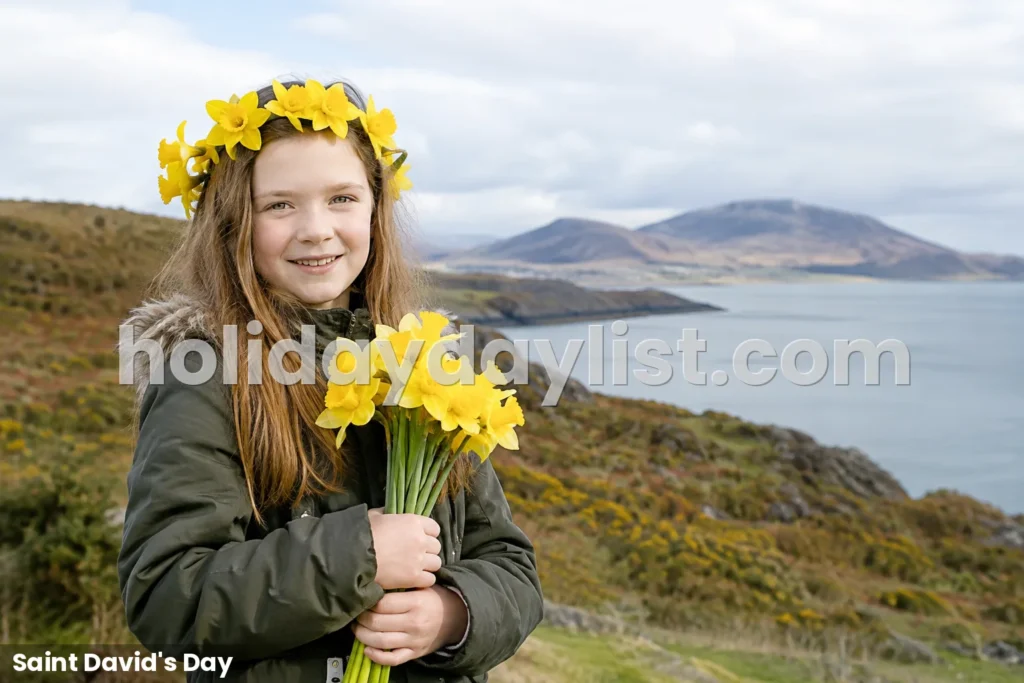
Saint David’s Day
Saint David’s Day is observed each year on March 1, especially in Wales, where Saint David is the country’s patron saint. The day is a chance to celebrate Welsh history, culture, language and community, often with music, traditional dress and a few familiar symbols of Wales.
How Saint David’s Day began
Saint David, known in Welsh as Dewi Sant, was a Christian bishop who lived in Wales during the sixth century. He became known for his religious teaching and is associated with the area around today’s St Davids in Pembrokeshire. Over time, he came to be recognized as the patron saint of Wales, and March 1—the traditional date of his death—became a day to remember him.
The observance has grown beyond a religious commemoration. Today, people mark Saint David’s Day in Wales and in Welsh communities around the world as an occasion to share Welsh heritage and take pride in its traditions.
Welsh symbols and traditions
Two plants are closely linked with the day: the daffodil and the leek. Both are associated with Wales, and people may wear one as a simple way to show their Welsh pride. The red dragon, featured on the Welsh flag, is another familiar symbol that often appears in celebrations.
Schools and community groups may hold concerts, assemblies or cultural events. Welsh songs, poetry and dancing can be part of the festivities, and some events include readings or performances in Welsh. Traditional clothing—often a tall black hat, shawl and long skirt for girls, or a Welsh rugby shirt for anyone who wants to join in—may also be worn, particularly by children taking part in school celebrations.
Food can add a taste of Wales to the occasion. Cawl, a hearty soup or stew, is a traditional Welsh dish, while Welsh cakes are small, lightly spiced griddle cakes often served with tea. Recipes and customs vary from home to home, so sharing a favorite family dish can be part of the fun.
Ways to celebrate Saint David’s Day
- Wear a Welsh symbol. Pin on a daffodil or leek, add a red dragon badge, or choose something in the colors of the Welsh flag.
- Enjoy Welsh food. Make Welsh cakes together or prepare a pot of cawl for a comforting meal.
- Listen to Welsh music. Try a Welsh choir recording, learn a traditional song, or explore contemporary music from Wales.
- Learn a few Welsh words. Start with “Bore da” for “Good morning” or “Diolch” for “Thank you,” and practice saying them with family or friends.
- Share Welsh stories and culture. Read about Wales, explore its poetry and landmarks, or invite someone to talk about their family’s connection to the country.
- Join a local celebration. Look for a school, library, cultural group or community event with music, dancing, crafts or Welsh-language activities.
Last updated October 26, 2026.
When is Saint David’s Day?
Saint David’s Day: Every year on March 1.
| Year | Date | Day of the week |
|---|---|---|
| 2027 | March 1 | Monday |
| 2028 | March 1 | Wednesday |
| 2029 | March 1 | Thursday |
| 2030 | March 1 | Friday |
| 2031 | March 1 | Saturday |
📄 Free printable 2027 holiday calendar · 📅 Every holiday in 2027, month by month
Frequently asked questions
When is Saint David’s Day in 2027?
Saint David’s Day is on Monday, March 1, 2027. After that, it falls on Wednesday, March 1, 2028. Every year on March 1.
Is Saint David’s Day a public holiday?
No. Saint David’s Day is an observance, not an official public holiday, so schools and businesses stay open as usual.
Why is Saint David’s Day celebrated on March 1?
Saint David, or Dewi Sant, was a sixth-century Christian bishop who became the patron saint of Wales. March 1 is the traditional date of his death and became a day to remember him.
What does Saint David’s Day celebrate?
It celebrates Saint David and Welsh history, culture, language and community. The observance is especially important in Wales and is also marked by Welsh communities around the world.
How do people celebrate Saint David’s Day?
People may wear a daffodil, leek or red dragon symbol, enjoy Welsh food such as cawl or Welsh cakes, and take part in music, poetry, dancing or community events. Some also learn Welsh words or wear traditional clothing.