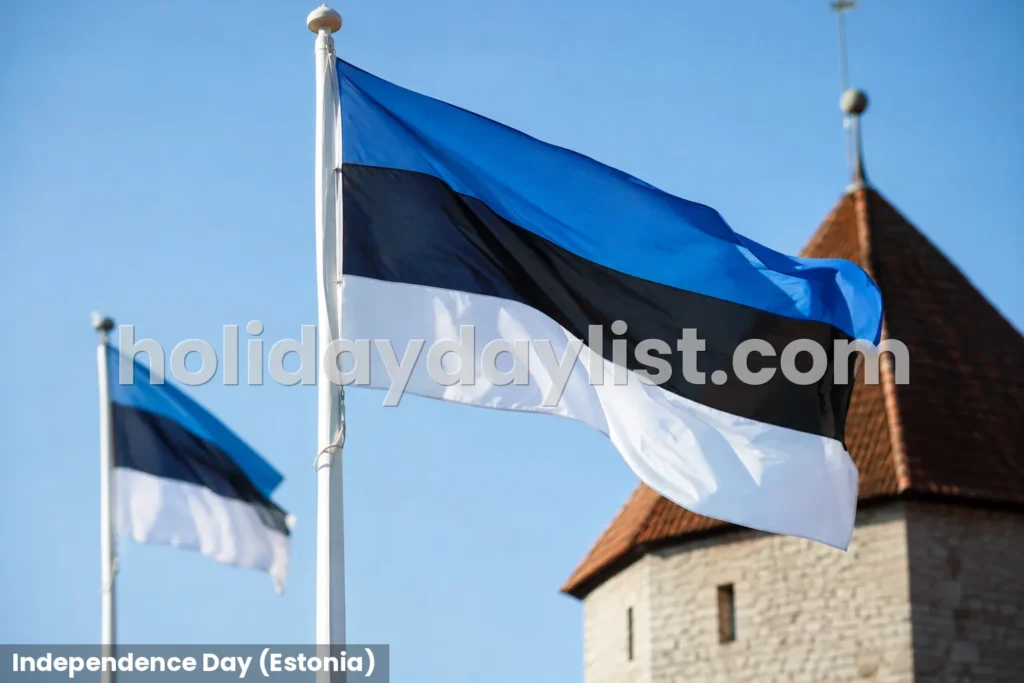
Independence Day (Estonia)
Estonia’s Independence Day, observed every year on February 24, celebrates the country’s declaration of independence in 1918. Known in Estonian as iseseisvuspäev, it is a national holiday and a time to honor Estonia’s history, culture and independence.
How Independence Day began
On February 24, 1918, Estonia’s Salvation Committee published the Estonian Declaration of Independence. The document proclaimed Estonia an independent democratic republic. It was issued during a period of upheaval as the Russian Empire was collapsing and German forces were advancing into Estonia.
Estonia’s independence was not secured all at once. The country soon faced a struggle to defend its freedom, and its independence was later recognized internationally. February 24 remained a meaningful date because it marks the public declaration that Estonia would govern itself. After Estonia restored its independence in 1991, the day continued to be celebrated as a national holiday.
What the day means to Estonians
Independence Day is both a celebration and a moment of remembrance. It recognizes the people who worked for Estonia’s freedom and those who helped preserve it through difficult periods. The day also celebrates the Estonian language, traditions and shared sense of national identity.
The blue, black and white Estonian flag is especially visible on February 24. Its colors are commonly associated with the sky, the soil and the hope for a brighter future. The flag can be seen on homes and public buildings, while national ceremonies bring communities together.
One of the best-known traditions is the raising of the national flag at sunrise on Toompea Hill in Tallinn, near the country’s parliament. The ceremony includes the national anthem and draws people who gather to mark the occasion. The president’s Independence Day reception is another prominent event, bringing together guests from across Estonian public life.
Celebrations take place beyond the capital, too. Towns and villages may hold flag ceremonies, concerts, church services or community gatherings. Families often celebrate in their own ways, sharing a festive meal or spending time together. For Estonians living abroad, the day can be a chance to connect with their heritage and celebrate with local Estonian communities.
Ways to celebrate Independence Day
You do not need to be in Estonia to take part. Here are a few thoughtful ways to mark the day:
- Learn about Estonia’s history. Read about the 1918 declaration and the country’s path to restored independence. A map or timeline can help children follow the story.
- Display the flag respectfully. If you have an Estonian flag, learn the proper way to display it and talk about what its colors mean to you.
- Explore Estonian culture. Listen to Estonian music, look up traditional crafts or try learning a few simple words in Estonian.
- Make a meal to share. Choose a dish inspired by Estonian cooking, or prepare a family favorite and use the meal as a chance to learn about the country.
- Find a local celebration. Check whether an Estonian cultural group, school or community organization is hosting a concert, gathering or flag ceremony.
- Share the story with children. Explain that Independence Day remembers a country’s declaration of self-government, and invite kids to make a blue, black and white craft.
Last updated October 23, 2026.
When is Independence Day (Estonia)?
Independence Day (Estonia): Every year on February 24.
| Year | Date | Day of the week |
|---|---|---|
| 2027 | February 24 | Wednesday |
| 2028 | February 24 | Thursday |
| 2029 | February 24 | Saturday |
| 2030 | February 24 | Sunday |
| 2031 | February 24 | Monday |
Frequently asked questions
When is Independence Day (Estonia) in 2027?
Independence Day (Estonia) is on Wednesday, February 24, 2027. After that, it falls on Thursday, February 24, 2028. Every year on February 24.
Is Independence Day (Estonia) a public holiday?
No. Independence Day (Estonia) is an observance, not an official public holiday, so schools and businesses stay open as usual.
What does Estonia’s Independence Day celebrate?
It celebrates Estonia’s declaration of independence on February 24, 1918, and honors the country’s history, culture, language and national identity.
How did Estonia’s Independence Day begin?
On February 24, 1918, Estonia’s Salvation Committee published the Declaration of Independence, proclaiming Estonia an independent democratic republic. The day continued to be celebrated after Estonia restored its independence in 1991.
How do people celebrate Estonia’s Independence Day?
Celebrations include raising the national flag, singing the national anthem, attending concerts or community gatherings, and sharing a festive meal. People can also learn about Estonian history, explore its culture or join a local Estonian community celebration.