Christmas is celebrated in many ways around the world, blending religious observances, family traditions, music, food, and seasonal customs. Here are 50 well-established facts about the holiday and some of the traditions connected with it.

Christmas Day and Its History
1. Christmas celebrates the birth of Jesus
For Christians, Christmas is a festival commemorating the birth of Jesus Christ.
2. December 25 is not given as Jesus’s birthday in the Bible
The Bible does not specify a calendar date for Jesus’s birth.
3. December 25 became a major Christian feast day
By the fourth century, Christians in Rome were observing the Nativity on December 25.
4. Some churches celebrate Christmas in January
Some Eastern Orthodox churches follow the Julian calendar for fixed feast days, so their December 25 falls on January 7 in the Gregorian calendar.
5. Christmas is part of the Christian liturgical year
In many Christian traditions, the Christmas season begins with Christmas Day and continues beyond it.
6. Advent comes before Christmas
Advent is a period of preparation observed in many Christian churches during the weeks leading up to Christmas.
7. The word “Christmas” has Christian roots
It comes from the Old English expression “Cristes mæsse,” meaning “Christ’s mass.”
8. Christmas Eve is December 24
Christmas Eve is the day or evening before Christmas Day, and many families and churches hold celebrations then.
9. Boxing Day follows Christmas Day in some countries
December 26 is known as Boxing Day in the United Kingdom and several other countries.
10. Epiphany is observed in January50 Facts About Christm
Many Christian traditions mark Epiphany on January 6, remembering the visit of the Magi to Jesus.
11. Christmas is a public holiday in many places
Many countries officially recognize Christmas Day as a public holiday, though observance varies around the world.
12. Not everyone celebrates Christmas as a religious holiday
Some people celebrate it as a cultural or family holiday, while others do not observe it.
13. Christmas has inspired art for centuries
Artists have depicted scenes from the Nativity in paintings, sculpture, music, and other forms.
14. Nativity scenes portray the birth of Jesus
These displays often include Mary, Joseph, the infant Jesus, and figures such as shepherds and the Magi.
15. The Christmas story appears in two Gospels
Accounts of Jesus’s birth appear in the New Testament books of Matthew and Luke, with different details in each.
Evergreens, Decorations, and Gift-Giving

16. Christmas trees are usually evergreen
Evergreen trees keep their foliage through winter, making them a popular seasonal decoration.
17. The Christmas tree tradition became popular in Britain during the Victorian era
Prince Albert, who was born in Germany, helped popularize the custom in Britain after marrying Queen Victoria.
18. Early Christmas tree lights used candles
Before electric lights became common, people used candles to illuminate Christmas trees, a practice that required great care.
19. Electric Christmas tree lights appeared in the 19th century
Electric lights offered an alternative to candles, although they were not immediately affordable or widely available.
20. Mistletoe is a familiar Christmas decoration
In some holiday customs, people share a kiss beneath a sprig of mistletoe.
21. Holly is used in seasonal decorations
Its glossy leaves and red berries make holly a traditional winter decoration in parts of Europe and North America.
22. Wreaths are often made with evergreen branches
A wreath’s circular shape makes it a popular decoration for doors and walls during the holiday season.
23. Tinsel was once made from real silver
Early tinsel strands were made from thin strips of silver before other materials became widely used.
24. Advent calendars count down to Christmas
Traditional Advent calendars have doors or windows that are opened on successive days in December.
25. Stockings are often hung as part of Christmas traditions
In some households, children find small gifts or treats in stockings on Christmas morning.
26. Gift-giving is part of many Christmas celebrations
Families and friends may exchange presents, though customs and the timing of gift-giving vary.
27. Santa Claus draws on the story of Saint Nicholas
Saint Nicholas was a Christian bishop remembered for generosity, and stories about him helped shape Santa Claus traditions.
28. Santa Claus has different names around the world
Names for the gift-bringing figure vary by language and tradition, including Père Noël in French and Weihnachtsmann in German.
29. Santa is commonly shown traveling by sleigh
In popular Christmas stories, his sleigh is pulled through the sky by reindeer.
30. “Jingle Bells” was not originally written as a Christmas song
James Lord Pierpont wrote the song in the 19th century, and its lyrics describe a winter sleigh ride without mentioning Christmas.
Music, Food, and Traditions Around the World
31. Christmas carols are songs associated with the holiday
Some carols have religious themes, while others celebrate winter or seasonal customs.
32. “Silent Night” was first performed in Austria
The carol was first performed in 1818 in the Austrian village of Oberndorf.
33. “A Christmas Carol” was published in 1843
Charles Dickens’s novella tells the story of Ebenezer Scrooge and his encounters with spirits on Christmas Eve.
34. Christmas crackers are a British holiday custom
These decorated paper tubes make a small snap when pulled apart and often contain a paper hat, a joke, or a small gift.
35. Mince pies are a traditional British Christmas food
Modern mince pies are usually filled with a sweet mixture of dried fruit and spices.
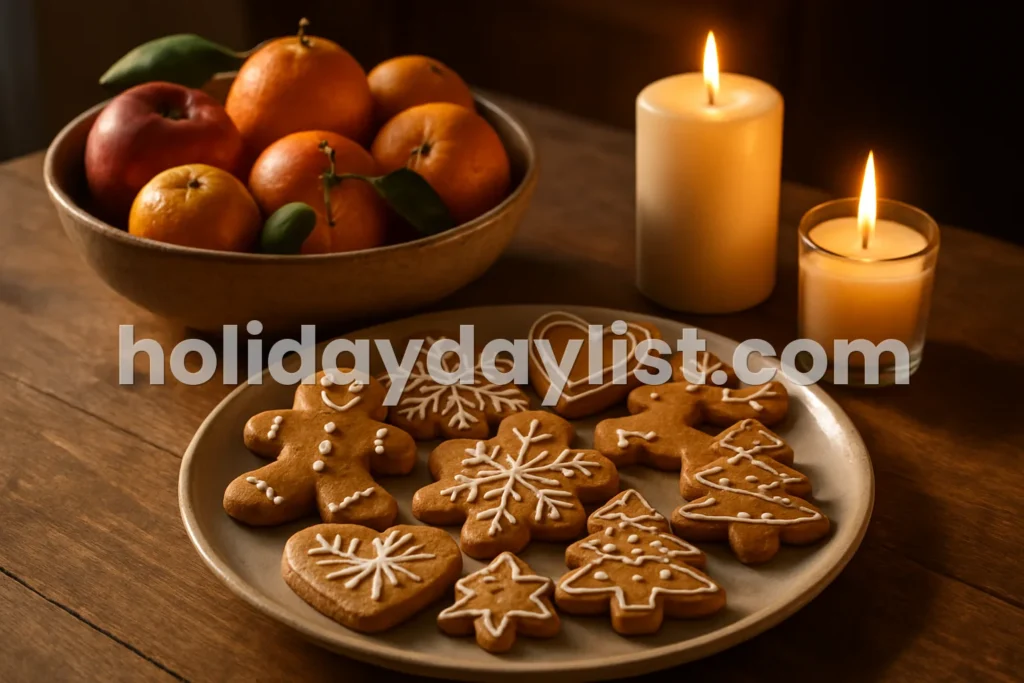
36. Gingerbread is made in many shapes at Christmas
In some places, people bake gingerbread houses or decorated cookies as part of holiday celebrations.
37. Panettone is a Christmas bread from Italy
This tall, sweet bread is often made with candied fruit and raisins.
38. The Feast of the Seven Fishes is associated with some Italian American families
It is a Christmas Eve meal tradition, though the dishes and number of seafood courses can vary.
39. Las Posadas is celebrated in Mexico and other places
This Christian tradition reenacts Mary and Joseph’s search for lodging before Jesus’s birth.
40. Christmas in Australia falls during summer
Because Australia is in the Southern Hemisphere, Christmas takes place during the summer season there.
41. Some Australians celebrate Christmas outdoors
Warm-weather gatherings may include meals or activities outside, depending on local conditions and family traditions.
42. The Philippines has a long Christmas season
Christmas celebrations there are known for beginning well before December, with traditions that vary among communities.
43. The Giant Lantern Festival is held in the Philippines
The festival takes place in San Fernando, Pampanga, and features large, colorful lanterns.
44. Christmas markets are popular in parts of Europe
These seasonal markets often feature stalls selling crafts, food, and decorations.
45. “Feliz Navidad” is a Spanish Christmas greeting
It means “Merry Christmas.”
46. “Joyeux Noël” is a French Christmas greeting
It also means “Merry Christmas.”
47. The poinsettia is associated with Christmas in North America
The plant, native to Mexico and Central America, is widely used as a holiday decoration.
48. Poinsettias have colorful leaves called bracts
The bright red parts commonly mistaken for flowers are modified leaves; the small flowers are clustered in the center.
49. Christmas cards became popular in Victorian Britain
One of the earliest commercial Christmas cards was produced in Britain in 1843.
50. Christmas traditions change from family to family
People may mark the holiday with worship, food, music, decorations, gatherings, or a mix of customs.
Reviewed by the Holiday List editorial team on October 8, 2026 · Last updated October 8, 2026.