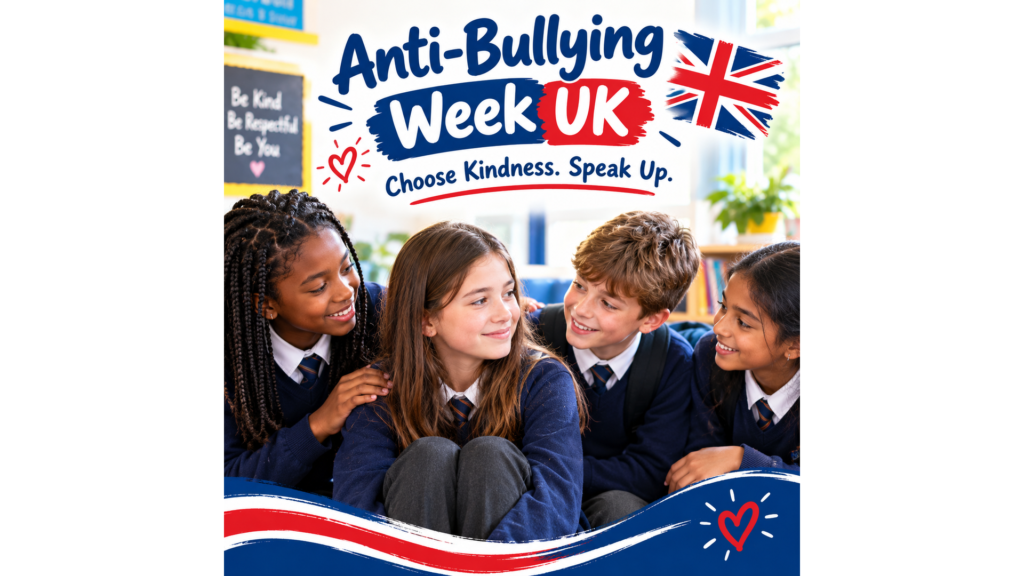
Anti-Bullying Week (UK)
Anti-Bullying Week is a UK-wide observance that encourages people to challenge bullying and help make schools, workplaces and communities kinder and safer. It takes place each November, with its dates varying from year to year; November 16 is the date specified for this observance. Activities often bring children, families and educators together to talk about respect, inclusion and what to do when bullying happens.
How Anti-Bullying Week started
Anti-Bullying Week is organised in the UK by the Anti-Bullying Alliance, a network of organisations and individuals working to prevent bullying. The week is a chance for schools and other groups to focus attention on the issue and encourage practical action. Its exact history and early origins are not always described consistently, so it is best to avoid assigning it a single founder or starting year.
The observance is not a public holiday. Instead, it offers a shared moment for conversations and activities that can continue throughout the year. Each year may have its own theme, giving schools and communities a fresh way to explore how bullying affects people and how bystanders can help.
What the week is about
Bullying is generally understood as hurtful behaviour that is repeated, or involves a power imbalance that makes it difficult for the person being targeted to defend themselves. It can take different forms, including name-calling, exclusion, intimidation, physical behaviour and harmful messages online. A disagreement or one-off unkind act may still need attention, even if it does not fit the usual definition of bullying.
Anti-Bullying Week highlights the importance of listening to people who are being targeted and responding thoughtfully. Support does not have to mean confronting someone alone. A trusted adult, teacher, manager or community leader can help assess what is happening and take appropriate steps. If bullying is online, keeping a record of messages and using platform reporting tools may also help.
The week also encourages people to think about their own everyday choices. Welcoming someone into a group, refusing to join in with hurtful jokes, or checking in with a person who seems isolated can make a difference. Small actions can help create an environment where people feel comfortable asking for support.
Ways to take part
- Start a conversation. Ask children or friends what kindness and respect look like in everyday situations. Listen without rushing to judge or offer an answer.
- Use the annual theme. If a school or local group is taking part, build an activity around that year’s Anti-Bullying Week theme, such as a class discussion, poster project or kindness challenge.
- Practise safe bystander support. Talk through ways to help without putting anyone at risk: invite someone to join your group, change the subject when a cruel joke starts, or tell a trusted adult what you witnessed.
- Review online habits. Discuss how to respond to hurtful posts, how to block or report accounts, and why sharing someone else’s embarrassing content can add to the harm.
- Make support easy to find. Schools, clubs and workplaces can clearly explain whom to contact and what happens after a concern is raised.
- Keep kindness going. Choose one simple action to repeat after the week ends, such as checking in on a classmate or making sure new members feel welcome.
When is Anti-Bullying Week (UK)?
Anti-Bullying Week (UK): Every year on the third Monday of November.
| Year | Date | Day of the week |
|---|---|---|
| 2026 | November 16 – November 20 | Monday – Friday |
| 2027 | November 15 – November 19 | Monday – Friday |
| 2028 | November 20 – November 24 | Monday – Friday |
| 2029 | November 19 – November 23 | Monday – Friday |
| 2030 | November 18 – November 22 | Monday – Friday |
Reviewed by the Holiday List editorial team on October 28, 2026 · Last updated October 28, 2026.
Frequently asked questions
When is Anti-Bullying Week (UK) in 2026?
Anti-Bullying Week (UK) is on Monday, November 16, 2026. After that, it falls on Monday, November 15, 2027. Every year on the third Monday of November.
Is Anti-Bullying Week (UK) a public holiday?
No. Anti-Bullying Week (UK) is an observance, not an official public holiday, so schools and businesses stay open as usual.
How did Anti-Bullying Week start?
The exact origin of Anti-Bullying Week isn't well documented. In the UK, the Anti-Bullying Alliance organises the week.
What is Anti-Bullying Week about?
It encourages people to challenge bullying and help make schools, workplaces and communities kinder and safer. It also promotes respect, inclusion, listening to people who are targeted and finding safe ways to offer support.
How can people take part in Anti-Bullying Week?
Start conversations about kindness, try an activity based on the annual theme, or practise safe ways to support someone being bullied. You can also discuss online habits and make it clear where people can find help.
Sources
✓ Date verified against Anti-Bullying Alliance on October 28, 2026.